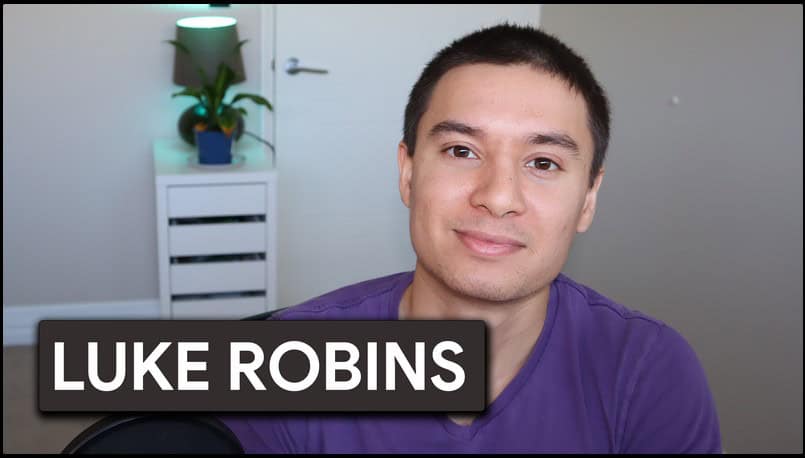
NESB Framework Explained: The 4 Psychological Triggers Behind Every Viral YouTube Hook (The Art of YouTube Storytelling by Luke Robins)
You have eight seconds.
That is the window a YouTube viewer gives your video before their thumb moves on. Not eight seconds of goodwill — eight seconds of active skepticism. Their brain is running a single calculation the moment your video begins: "Is this worth my time?"
Most educational creators answer that question wrong. They open with credentials, a channel intro, or a vague promise like "today we're going to talk about..." None of that answers the viewer's real question. The viewer is not asking "who are you?" They are asking "why should I care right now?"
Luke Robins, creator of The Art of YouTube Storytelling, built a framework specifically to answer that question in a way that bypasses rational skepticism and speaks directly to psychological need. He calls it the NESB Framework — four psychological triggers that, when stacked correctly in a hook, make continuing to watch feel like the only logical choice.
What Is the NESB Framework?
NESB stands for: New, Easy, Safe, Big.
These are not content categories. They are psychological motivators — the four core reasons a human brain decides something is worth its attention. Each one corresponds to a deep cognitive drive, and each one has an alter ego: a way it can be misapplied that kills the hook instead of landing it.
The insight behind NESB is that viral hooks do not succeed by accident. When you break down the opening ten seconds of any video with outsized retention, you will find at least two or three of these triggers firing simultaneously. The framework gives educational creators a replicable system for engineering that effect intentionally rather than hoping it happens naturally.
The Four Triggers: Core Components and Their Alter Egos
1. New
The brain is a prediction machine. It is constantly scanning for novelty — information that updates or contradicts its existing model of the world. When something genuinely new appears, the brain cannot ignore it. It has to process it.
A hook that leads with a genuinely new idea, a counterintuitive fact, or a perspective the viewer has never encountered creates an involuntary pull. The viewer does not choose to be curious. They just are.
The alter ego: Clickbait.Clickbait promises newness it cannot deliver. It triggers the curiosity drive with a headline that implies a revelation, then fails to pay it off. The viewer feels cheated. They leave, and worse, they never trust your channel again.
The NESB version of "New" must be authentic. The hook needs to surface something genuinely surprising that the content then fully delivers on. If your video has a real insight that most creators would bury in minute seven, lead with that insight — or at least lead with the shape of it.
2. Easy
Perceived effort is a massive factor in whether someone starts or continues watching. If a viewer senses that understanding your content will require significant cognitive work, they will defer it — and deferral on YouTube means abandonment.
A hook that signals ease does not mean dumbing content down. It means framing complex information as approachable. Phrases like "there are only three things you need to know" or "once you see this, it clicks immediately" reduce the perceived cost of watching. The brain hears: this is manageable.
The alter ego: Oversimplification.If "Easy" becomes "this is so simple a child could do it," you insult your audience's intelligence or, worse, you make them doubt whether the content is sophisticated enough to be useful. The correct application of Easy reassures, not condescends. It lowers the barrier to entry without lowering the perceived value of what's inside.
3. Safe
This trigger is the most underestimated of the four. Human decision-making is loss-averse by default — we weight potential downside more heavily than potential upside. When someone considers watching a twelve-minute video, some part of their brain is calculating risk: "Will I waste my time? Will I feel stupid? Will this be embarrassing to admit I watched?"
A hook that addresses safety reduces that subconscious resistance. Social proof is one version of this — "200,000 people have used this method" signals that others have taken the risk and survived. Normalizing the problem is another — "if you've ever felt like your videos don't connect, you're not alone" tells the viewer they are not an outlier for struggling.
The alter ego: Hedging.Overusing safety language makes a hook feel timid. "This might not work for everyone, but some people have found..." does not reassure — it plants doubt. The Safe trigger should reduce the viewer's risk perception without making the creator sound unsure of their own content.
4. Big
The stakes. Why does any of this matter? What is the size of the transformation or the consequence on offer?
Big does not require hyperbole. A hook that accurately conveys that the information inside will meaningfully change how someone does something important to them is Big. The viewer needs to feel that the upside of watching is worth the cost of their attention.
The alter ego: Hype.Hype promises a Big outcome that the content cannot deliver. "This will change your life forever" attached to a video about browser extensions creates a mismatch that breaks trust. Big must be proportional and credible. The goal is for the viewer to finish the video and feel the Big promise was actually kept — ideally exceeded.
A Real Example: NESB in Action
Consider a video targeting educational YouTube creators with this hook:
"Most educational YouTube channels never grow past 1,000 subscribers — not because of bad cameras or poor editing, but because of a single structural mistake in how they order information. I made this mistake for two years before I found the fix, and once I changed it, one video hit 235,000 views on a channel with 4,000 subscribers."
Run it through NESB:
- New: "a single structural mistake in how they order information" — counterintuitive, specific, not what the viewer expected
- Easy: "a single structural mistake" — implies the fix is learnable and contained
- Safe: "I made this mistake for two years" — normalizes the struggle, positions the creator as a fellow traveler, not a guru looking down
- Big: "235,000 views on a channel with 4,000 subscribers" — concrete, verifiable, proportional to the effort of watching
Get Every Framework from This Course
The course costs hundreds of dollars. All frameworks extracted — $49/year.
Start free — 10 full summaries, no credit card
How to Apply NESB This Week
You do not need to refilm anything. The NESB Framework applies to scripting, and you can retrofit it to your next video before you record.
Step 1: Write your hook without any framework. Say what you were going to say. Step 2: Score it. Does it contain a genuinely New idea or framing? Does it signal Easy access? Does it reduce perceived risk (Safe)? Does it make the stakes feel Big? Step 3: For any trigger missing or weak, write one sentence that activates it. You do not need four separate sentences — the best hooks weave all four into two or three. Step 4: Read the hook aloud. If it sounds like a list of promises, revise until it sounds like the opening of a story. NESB is a checklist for your internal audit, not a template for the viewer to see.Common Mistakes When Using NESB
Stacking without integrating. Creators who discover NESB sometimes write hooks that feel like four separate bullet points delivered verbally. "This is new. And it's easy. And it's safe. And it's big." That is not a hook — it is a sales pitch. The triggers need to emerge from a single, coherent narrative sentence or two. Leading with Big and neglecting New. High stakes without novelty produces a hook that feels like every other motivational video. The viewer has heard big promises before. Pair the Big with something genuinely New and the promise becomes credible. Treating Safe as optional. Many creators skip the Safe trigger because they think confidence means never acknowledging downside. But viewers are not looking for invincibility — they are looking for honesty. A creator who acknowledges that they struggled (and solved it) is far more trustworthy than one who presents themselves as having always known the answer.The Bigger Picture
The NESB Framework is one component of the larger scripting system taught inside The Art of YouTube Storytelling by Luke Robins. The course covers 26 lessons built around a 5-Step Educational Story Framework, the Four-Part Script Structure, A-Plot/B-Plot retention techniques, and story structures adapted from Dan Harmon and the Cinderella arc — all specifically designed for educational creators who want a repeatable system, not a bag of random tactics.
If you are an educational creator with a channel under 10,000 subscribers who wants to understand why your retention drops and how to fix it structurally, this course was built for that exact problem.
Course To Action covers 110+ premium courses — every one with structured summaries, audio for every lesson, and AI tools including "Apply to My Business" and "Generate Action Plan." Start free with 10 summaries, no credit card required. Full access is $49 for 30 days or $399/year, one payment, no auto-renewal. Explore the full course breakdown at coursetoaction.com/.
Get All Frameworks from This Course
The course costs hundreds of dollars. The complete breakdown is $49/year — every course on the platform.
This is one framework. Course To Action has every framework, every lesson, and AI that applies it to your specific business. Read or listen — every summary has audio.
Start free — 10 full summaries, no credit card required