Context as Lens: Melanie Ann Layer's Framework for Redesigning Your Year from the Inside Out
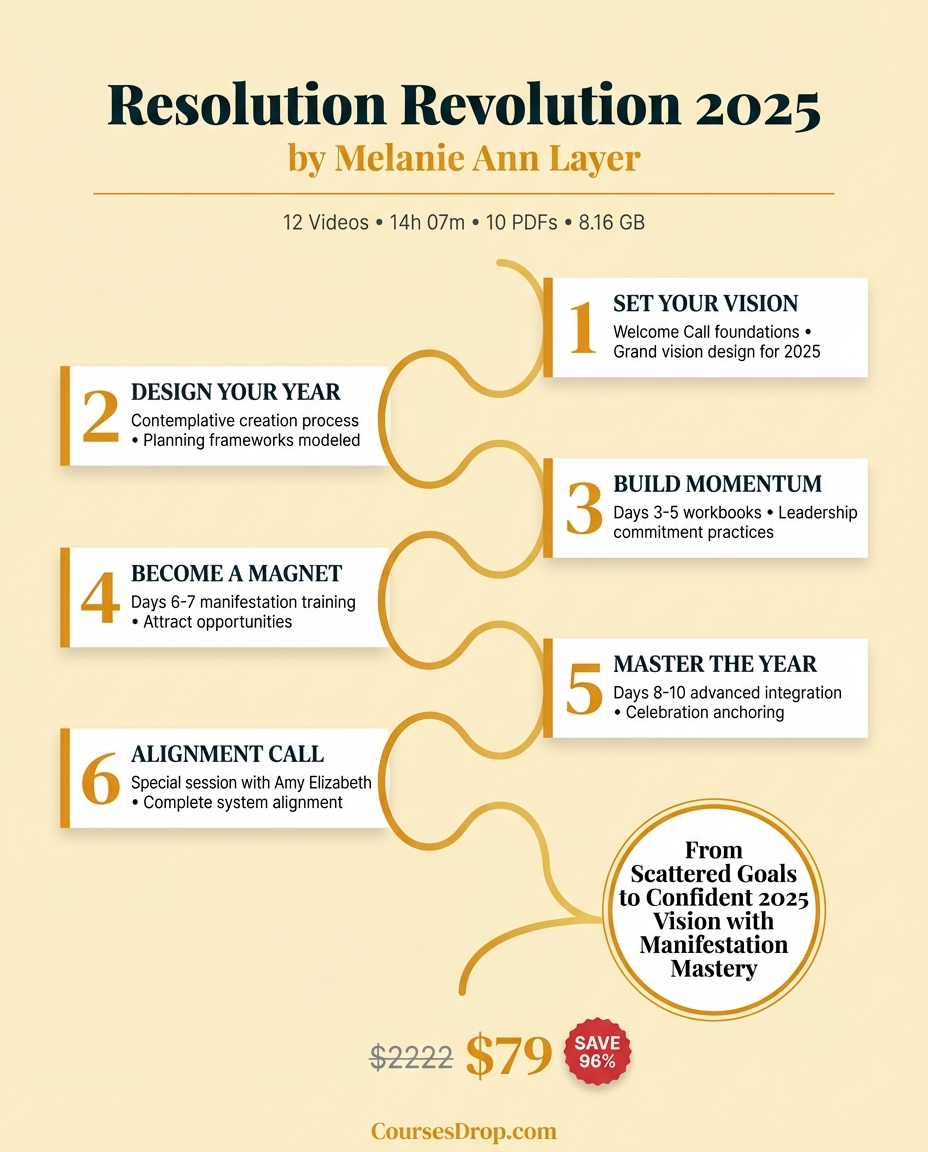
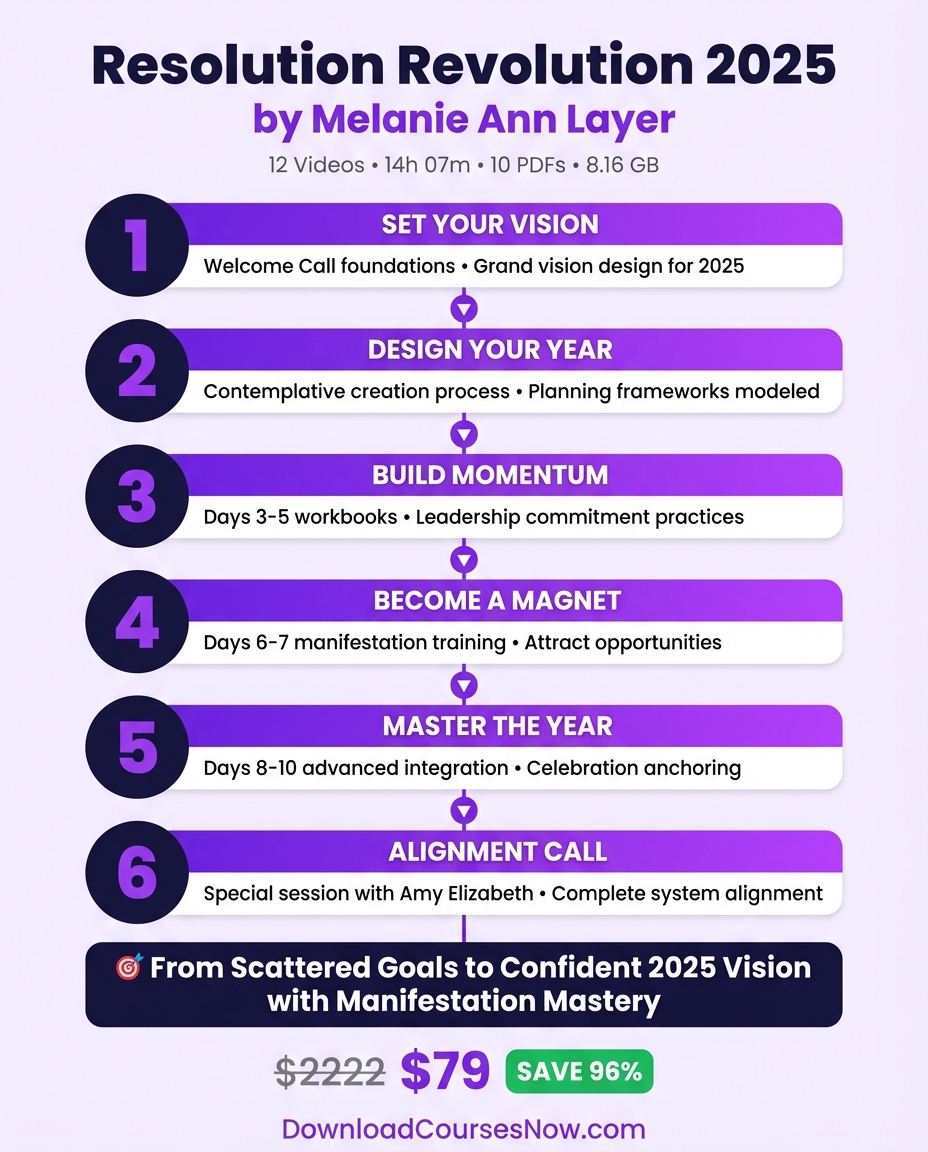
Most goal-setting advice skips a step. It gives you the template, the habit tracker, the 90-day plan — and then wonders why you abandon it by February. Resolution Revolution 2025, Melanie Ann Layer's 10-day January intensive, argues that what gets skipped is the most important part: the context through which you are interpreting your own life.
That skipped step is what the Context as Lens framework is designed to address.
What "Context as Lens" Actually Means
The framework starts with a deceptively simple claim: you do not experience events. You experience your interpretation of events. The lens through which you filter information — your assumptions about who you are, what is possible, what you deserve, what hard work looks like — shapes every decision you make, every goal you set, and whether you pursue it with energy or quiet resignation.
Layer uses the phrase "context as lens" to describe this interpretive layer. Context, in her usage, is not your circumstances. It is the invisible frame around your circumstances that determines what you think those circumstances mean.
Two people can have identical bank balances, identical businesses, identical family situations, and experience completely different realities — because their context differs. One interprets the balance as proof she is behind. The other interprets it as a starting point. The number is the same. The context is not.
This is not motivational reframing. Layer is making a structural argument: if you build a new year's plan on top of an unchanged context, you are not actually changing anything. You are planting new seeds in the same soil. If the soil is concrete — if the underlying interpretive frame is "I am someone who almost makes it" or "success is always just out of reach" — no plan will grow in it.
The Practical Mechanics
The framework is not purely philosophical. Inside Resolution Revolution 2025, Layer walks participants through a process of surfacing their current operating context before they do any goal-setting at all.
The sequence looks roughly like this:
Step 1: Name the context you are currently running. This is harder than it sounds. Most people cannot articulate their context because it is invisible to them — it is the thing they see through, not the thing they see. Layer uses prompting questions to draw it out: What do you assume is always true about money? What do you expect to be difficult? When something good happens, what do you immediately anticipate will cancel it out?The answers reveal the lens. Someone might discover their operating context is "I have to earn everything twice." Another might find it is "I am always the person who almost but not quite." These are not facts. They are interpretive habits — and they are making decisions on your behalf every day.
Step 2: Evaluate whether that context is one you chose. Layer's argument is that most people's contexts were assigned to them — by early experiences, by family narratives, by cultural defaults — rather than consciously selected. The moment you can see a context as a context rather than as reality, you have leverage over it. Step 3: Design a context deliberately. This is where the framework moves from diagnosis to construction. Participants are guided to articulate what context they would choose if they understood it was a choice. Not an affirmation ("I am abundant") but a structural claim ("In my world, resources expand when I commit to things"). The distinction matters. Affirmations sit on top of an unchanged context. A redesigned context replaces the frame itself. Step 4: Filter your goals through the new context. Only after this work does Layer move into what most people would recognize as planning. The sequencing is intentional. Goals set through the old lens will feel familiar — because they are. Goals set through a deliberately chosen context feel different, often uncomfortably so, because they reflect what you actually want rather than what your old interpretive habits have trained you to aim for.Why This Framework Is Structurally Different from Mindset Work
There is a reasonable objection here: is this just "mindset work" repackaged? The answer is no, and the distinction is worth being precise about.
Standard mindset work typically operates at the level of thoughts and beliefs. The instruction is to replace a negative thought with a positive one, or to identify a limiting belief and dispute it. This is useful, but it leaves the underlying context intact. You can successfully dispute "I am not good with money" and replace it with "I am learning about money" while still operating from a context in which financial ease is not available to someone like you.
Context as Lens operates one level below belief. It is not about what you think. It is about the frame that determines which thoughts even become available to you. Changing context is more like changing the operating system than updating an app.
This also means the work is more disorienting than affirmation-based approaches. When your context shifts, things that felt like facts become visible as interpretations. That can be destabilizing before it becomes useful.
Get Every Framework from Resolution Revolution 2025
The course costs $2222. All frameworks extracted — $49/year.
Start free — 10 full summaries, no credit card
What It Produces When It Works
Participants who work through this framework report a specific kind of shift: they stop arguing with their goals. Most people set goals while simultaneously running an internal commentary about why those goals probably will not happen. The commentary is the old context speaking. When the context changes, the commentary quiets — not because of forced positivity, but because the interpretive frame no longer generates that commentary automatically.
What replaces it, in Layer's framing, is a kind of forward motion that feels less like discipline and more like alignment. You are no longer trying to override your interpretive habits with willpower. You are operating from a context that makes the goal feel coherent rather than aspirational.
Honest Limitations
This framework is not for everyone, and it is worth being direct about that.
First, it requires a degree of introspective honesty that some people find uncomfortable or simply are not prepared for. If you are looking for a planning system that does not require you to examine your relationship with your own identity, this is not the right tool.
Second, the framework is embedded in a spiritually and energetically oriented course. Layer uses language around energy, alignment, and frequency throughout. If that framing is a barrier for you, it will make the underlying structural content harder to access — because the context work is woven into sessions that also include Human Design references and energetic alignment practices.
Third, this is not a substitute for strategy. Context as Lens will not tell you which business model to use, what to price your offer at, or how to build a funnel. It addresses the interpretive layer beneath strategy, which is genuinely important — but the strategic layer still needs to be built separately.
Who This Is For
The framework is most useful for people who have already done the external work — the systems, the plans, the strategies — and keep encountering a ceiling they cannot explain. If your context is working against you, better tactics will not solve it. That is the specific problem Context as Lens is designed to address.
It is also useful for people at a genuine inflection point: starting a new year, closing a chapter, rebuilding after something significant. The framework gives you a way to make a real break rather than carrying last year's interpretive habits into a new calendar.
Resolution Revolution 2025 is a $2,222 course. The Context as Lens framework is introduced early in the intensive and underpins most of what follows. Course To Action has the complete breakdown — every framework extracted, audio on every summary, and the "Apply to My Business" AI tool to test these ideas against your own business (3 free credits). Start free: 10 summaries, no credit card required. Full access is $49/30 days or $399/year, no auto-renewal. 110+ premium courses.
Read the Full Resolution Revolution 2025 Breakdown — Start FreeGet All Frameworks from Resolution Revolution 2025
The course costs $2222. The complete breakdown is $49/year — every course on the platform.
This is one framework. Course To Action has every framework, every lesson, and AI that applies it to your specific business. Read or listen — every summary has audio.
Start free — 10 full summaries, no credit card required