
The Energetic Match Framework Explained: Why You Attract Who You Are, Not Who You Want — from Manifest by Melanie Ann Layer
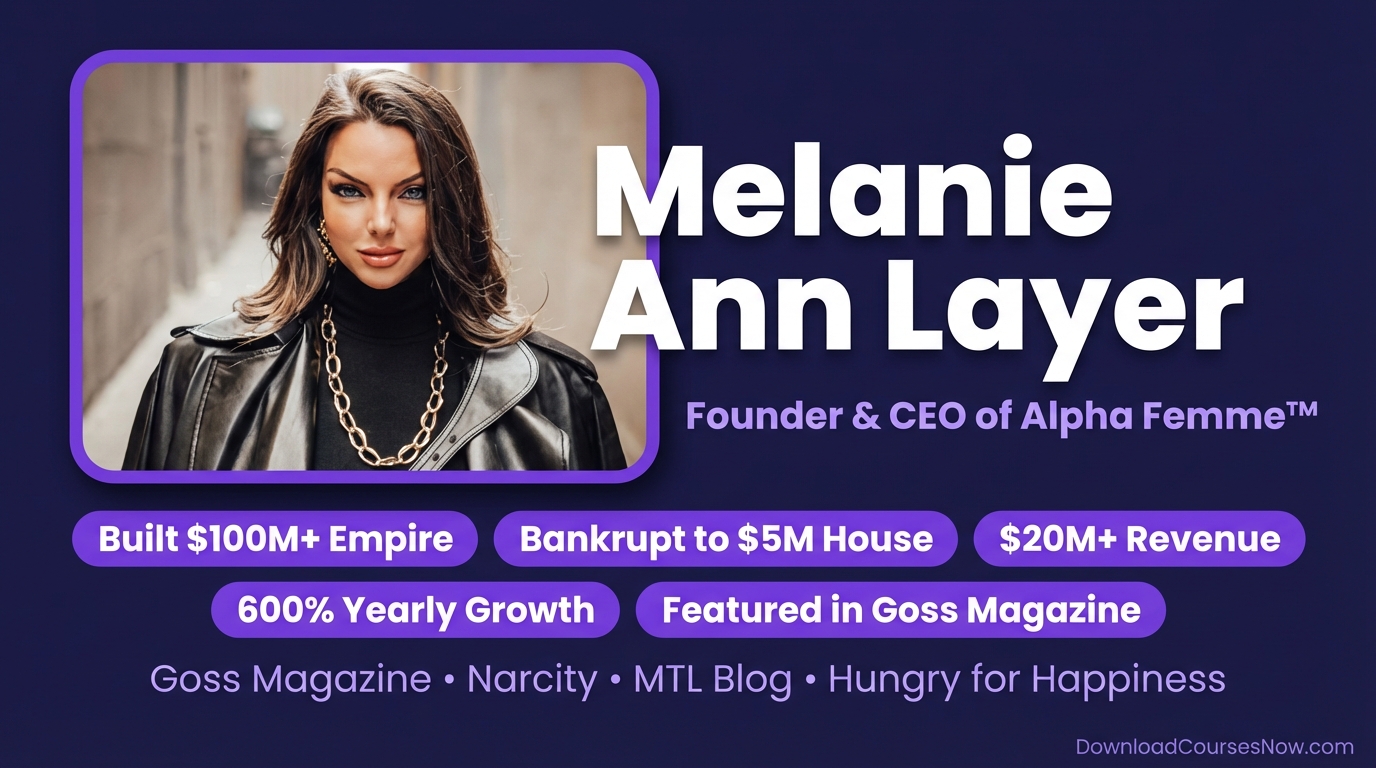
The Energetic Match Framework is Melanie Ann Layer's four-component model for understanding why relationship patterns repeat — and the specific inner work required to break them. It is the foundational framework inside her $3,333 relationship masterclass, Manifest, which covers eight frameworks across 29.2 hours of live teaching. Layer built a $100 million coaching empire through Alpha Femme, working primarily with high-achieving women who have mastered every dimension of their professional lives but find their intimate relationships lagging behind.
Most people trying to improve their relationships are working on the wrong variable. They are focused on who they are choosing — better screening, higher standards, clearer communication, more careful vetting. They are refining their selection process while leaving the deeper problem entirely untouched: that the quality of who you attract is determined not by your selection criteria but by your current energetic state. You are not drawing people toward you through choice. You are drawing them through resonance. According to the full breakdown on Course To Action, this reframe from selection to resonance is the foundational shift the entire course is built on.
What Is the Energetic Match Framework?
The Energetic Match Framework is a model developed by Melanie Ann Layer that states: you are always an energetic match for what you currently have. The relationship you're in, or the patterns showing up in the relationships you're attracting, are not random. They are precise reflections of your current emotional state, healed and unhealed wounds, and the energy you are operating from day to day.
The core insight is that trying to attract a different relationship without first becoming the person who energetically matches that relationship is the root cause of most recurring relationship failure. You can change who you date. You can change your communication style, your dating profile, your expressed standards. But if the underlying energetic state remains unchanged, you will find a way to recreate the same relationship dynamic with new people. Different faces, identical patterns.
In plain terms: the relationship you want requires you to become a different person first. Not a better-presenting version of yourself. A genuinely different person, at the level of beliefs, triggers, and emotional patterns.
The Core Components
Component 1: The Energetic Inventory
The first step in the framework is an honest accounting of what you are currently a match for. Not what you want, not what you deserve — what the evidence of your actual relationship history suggests you are currently attracting.
Layer's diagnostic process is direct. She asks students to look at the patterns that have repeated across their relationships, not the surface-level details but the category of experience. What emotional dynamic keeps showing up? Where does the same conflict reliably appear? What do your partners seem to have in common, not in their personalities but in how they ultimately relate to you?
The answers to these questions are not judgments. They are data. They map the gap between where you currently are and where you want to be — what Layer calls "the void." Understanding the void is the prerequisite for closing it. Most people experience the void as suffering and try to escape it by quickly finding a new partner. Layer's framework reframes the void as a developmental space: the distance between who you currently are and who you need to become.
Component 2: The Inner Work Requirement
The key takeaway is that closing the gap between current energetic state and desired relationship requires inner work on three distinct layers:
Trigger resolution. Layer teaches that triggers are emotional portals — they transport you back to the age at which the original wound was created. A 35-year-old in a conflict with their partner may be operating from the emotional reality of a 7-year-old who learned that love is conditional. The defense mechanisms built then are still running adult behavior. You cannot attract a different relationship while those triggers are dictating your responses, because your triggers are communicating your current energetic state to potential partners before you consciously choose anything. Childhood wound identification. The wounds that most consistently shape adult relationship patterns are the ones you have normalized — the ones you have been carrying so long they feel like personality rather than injury. Layer's framework asks students to identify the specific emotional needs that were not met in childhood and trace how those unmet needs are currently showing up as requirements, tests, or unconscious traps in adult relationships. Authentic self-fullness. The framework distinguishes between two ways of entering a relationship: from fullness or from emptiness. Entering from emptiness means you are bringing needs that you are hoping the relationship will fill. Entering from fullness means you have created a life that already satisfies you, and a partner enriches something that is already rich. The energetic signal of emptiness attracts people who are also running from emptiness — which creates dependence, resentment, and eventual collapse. The energetic signal of fullness attracts people who are also full — which creates genuine partnership.Component 3: The Becoming Process
What makes this different is that becoming an energetic match for a different relationship is not a thought exercise. It is a behavioral and emotional practice that runs in advance of the relationship, not alongside it.
Layer's framework outlines specific practices for this shift. She asks students to romance themselves — to identify what genuinely lights them up and begin doing it consistently, without a partner, so that they develop a concrete roadmap for how they like to be treated. The premise is that if you do not know how to create joy for yourself, a partner has no template to follow. You become impossible to love well because you have never modeled what loving you well looks like.
She also teaches students to expand their capacity to receive — to practice accepting care, acknowledgment, and generosity without deflecting, minimizing, or immediately reciprocating. Many high-achieving women, in particular, have atrophied their receiving capacity by over-developing their giving and doing. They are so accustomed to creating outcomes that the experience of being cared for feels uncomfortable or suspect. This discomfort communicates energetically, and it repels the depth of care they intellectually desire.
This is one of 8 frameworks in Manifest. The complete breakdown — every framework, every limitation — is available on Course To Action. Start free.
Component 4: The Attraction Shift
When the inner work is progressing and the energetic state shifts, the attraction pattern shifts automatically. Layer is explicit that this is not metaphor. The way you carry yourself, the conversations you initiate, the things you are willing to tolerate and not tolerate, the emotional regulation you demonstrate under pressure — all of these are tangible signals that different people respond to differently. Doing the inner work does not magically materialize a partner. It changes the pool of people who find you compelling, and it changes what you find compelling, so that you are no longer drawn to the familiar dysfunction.
Real Example: The High-Achiever Trap
Layer's primary student profile is the woman who has succeeded enormously in business — built a company, led teams, created real outcomes — and finds that the same directness, decisiveness, and drive that makes her exceptional professionally is quietly dismantling her intimate relationships.
She is running masculine energy constantly. She is giving, doing, fixing, directing. She comes home and cannot turn it off. Her partner, sensing no space to lead, either withdraws into passivity or escalates into conflict. She interprets his withdrawal as weakness. He interprets her control as a signal that he is not needed. Both are right about the pattern. Neither understands the mechanism.
The Energetic Match Framework diagnoses this: she is a match for partners who fit a dynamic where she leads and they follow — not because that is what she wants, but because that is the energy she is currently transmitting. To attract a genuinely masculine partner who leads, protects, and creates security, she must create space in herself to receive those things. She must develop the capacity to be in feminine energy — receiving, allowing, flowing — not just during relaxed moments, but as a practiced state she can access even when her instinct is to take control.
This is not a personality change. It is an energetic expansion. She still has all of her capability. She is adding a dimension she has let atrophy.
Get Every Framework from Manifest
The course costs $3333. All frameworks extracted — $49/year.
Start free — 10 full summaries, no credit card
How to Apply This Week
Step 1: Run the energetic inventory. Write down the three most consistent patterns that have appeared across your significant relationships. Not the individual stories — the categories. What emotional dynamic kept recurring? What were you always trying to get that you never fully received? What role did you always end up playing? This inventory maps your current energetic state more accurately than any introspective exercise, because the pattern is the data. Step 2: Identify the childhood wound underneath the pattern. For each pattern you identified, ask: when did I first feel this? What age? What was happening? You are looking for the original wound that the pattern is organized around. You are not trying to resolve it in this step — you are trying to name it. Naming it begins the process of distinguishing the wound from your identity. Step 3: Build one self-care practice that teaches your future partner how to love you. Choose one thing that genuinely creates joy for you — something specific, sensory, and entirely for yourself. Commit to doing it this week without waiting for a partner to provide it. This is the first step in developing fullness: demonstrating to your own nervous system that you are capable of creating the experiences you desire, and beginning to build the roadmap that a future partner can follow.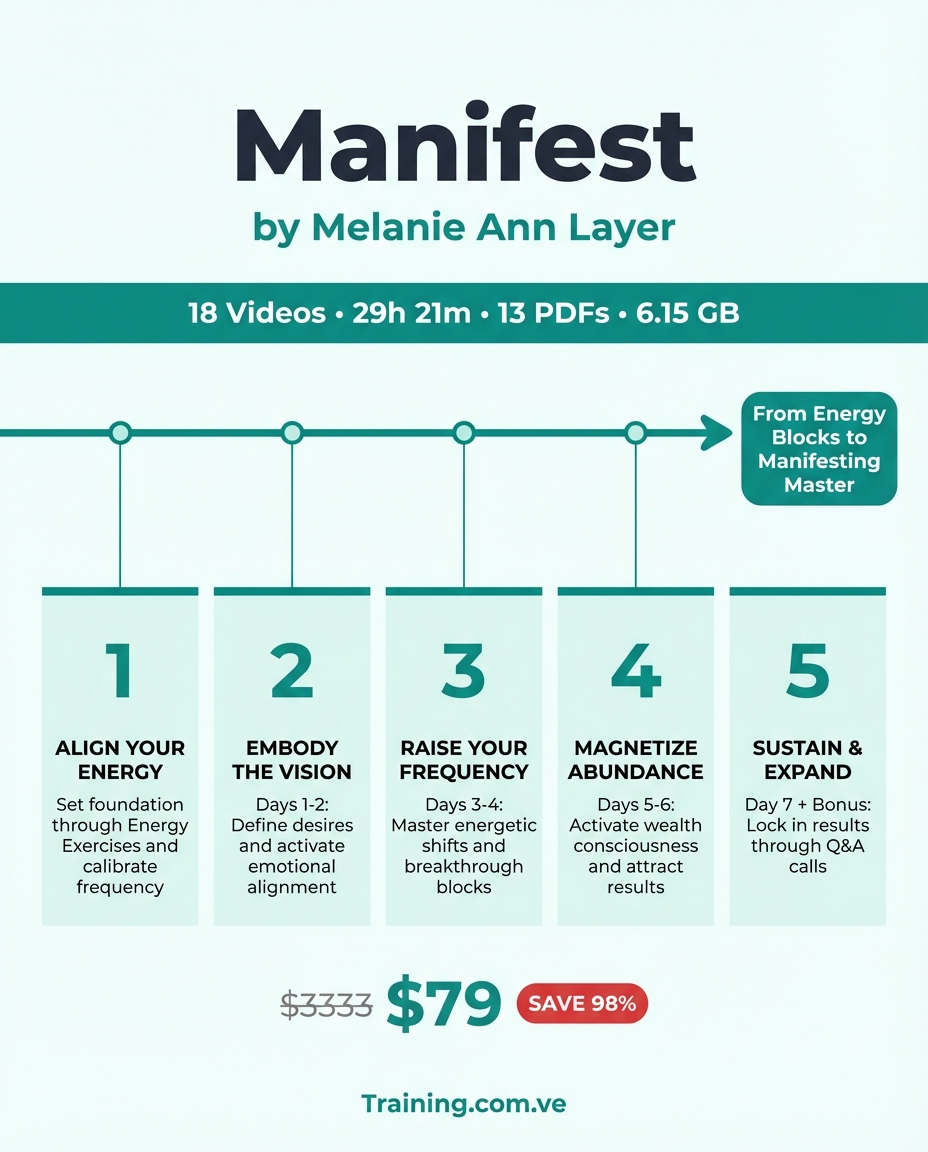
Common Mistakes
Mistake 1: Confusing energetic match work with self-improvement for attractiveness. The Energetic Match Framework is not a self-optimization program designed to make you more appealing. It is a healing process designed to make you a match for a different level of connection. People who approach it as a self-improvement project tend to add behaviors on top of unchanged patterns. The framework requires subtraction — releasing the defense mechanisms, the performing, the testing — not addition. Mistake 2: Rushing through the void to find a new person. The void — the developmental space between your current state and your desired relationship — is uncomfortable, particularly for high-achievers who are accustomed to solving problems quickly. The instinct is to find a new partner and do the inner work alongside them. Layer's framework is direct about the problem with this approach: you will use the new relationship to avoid the inner work, and you will recreate the old patterns inside the new relationship. The void must be navigated, not escaped. Mistake 3: Doing the work intellectually without doing it emotionally. The Energetic Match Framework can be understood as a concept in twenty minutes. The actual work — the trigger resolution, the receiving capacity expansion, the authentic self-fullness development — is felt in the body, not thought through in the mind. Students who engage with the ideas but avoid the emotional experience of them will understand the framework without shifting their energetic state. In summary, understanding is not the same as becoming.The Leverage Point
The Energetic Match Framework's most important insight is that the gap between the relationship you have and the relationship you want is not a selection problem. It is a becoming problem. No amount of better choosing will close a gap that requires a different version of you to show up on the other side of it.
The framework provides a diagnostic tool for understanding exactly what kind of becoming is required — and a developmental path for completing it. The path is uncomfortable, because it requires looking honestly at patterns you have been managing rather than healing, wounds you have been normalizing rather than resolving, and a version of yourself that is smaller than what you are capable of.
The Energetic Match Framework is one of eight frameworks inside Manifest. The others — including the For Me/For You/For Us Decision Model, the Emotion-First Communication Protocol, the Acknowledgment vs. Mothering distinction, and the Oak Tree in a Tornado model — all build on this foundation.
The course costs $3,333. The complete breakdown of all 7 frameworks — plus 110+ other premium courses — is available on Course To Action for $49/30 days. Free account, 10 summaries, no credit card. Every summary includes audio. The AI advisor applies these frameworks to YOUR situation — 3 credits free.
Frequently Asked Questions
Is the Energetic Match Framework just "like attracts like"? Not exactly. The Energetic Match Framework is Melanie Ann Layer's four-component diagnostic model — Energetic Inventory, Inner Work Requirement, Becoming Process, and Attraction Shift — that maps the specific gap between your current emotional state and the relationship you want. It goes beyond the general principle by providing a structured process for identifying childhood wounds, resolving triggers, and building authentic self-fullness before entering a relationship. What does Manifest actually teach besides the Energetic Match Framework? Manifest covers eight named frameworks across 29.2 hours. Beyond the Energetic Match Framework, it includes the For Me/For You/For Us Decision Model, the Emotion-First Communication Protocol, the Acknowledgment vs. Mothering distinction, the Masculine/Feminine Energy Dynamics model, the Oak Tree in a Tornado model, the Circular Dating approach, and the Deep Ball Breathing Technique. Is the Energetic Match Framework only for women? The framework itself is gender-neutral — it applies to anyone examining their relationship patterns. However, Manifest is primarily taught for high-achieving women, and the examples and applications focus heavily on feminine energy work. Kevin Bruce Scott provides the male perspective, particularly around emotional shutdown and the guilt/shame trigger cycle. Can you apply the Energetic Match Framework without buying Manifest? The three steps outlined in the "How to Apply This Week" section are directly actionable without the course. The full course provides 29.2 hours of guided application, live examples, and the seven additional frameworks that build on this foundation. Where can I read a full breakdown of Manifest? The complete independent breakdown — every framework, every limitation, and who the course is built for — is available free at Course To Action.Course To Action publishes independent framework-level breakdowns of online courses — the 20% that delivers 80% of the value, so you can make an informed decision before you spend a dollar.
Get All Frameworks from Manifest
The course costs $3333. The complete breakdown is $49/year — every course on the platform.
This is one framework. Course To Action has every framework, every lesson, and AI that applies it to your specific business. Read or listen — every summary has audio.
Start free — 10 full summaries, no credit card required