The 4-Part Messaging Structure Explained: Write Copy That Makes Premium Clients Feel Seen — from Magnetize Dream Clients On Command by Becky Keen
The 4-Part Messaging Structure is Becky Keen's sequencing framework for sales pages, social posts, and offer descriptions, taught in Session 4 of her $375 program Magnetize Dream Clients On Command. The core insight is that most coaches write their copy in the wrong order — leading with logistics instead of recognition — and that single sequencing error is why qualified prospects do not convert. According to the full breakdown on Course To Action, this is one of five named frameworks in the program.
Most coaches open with the container details — the call schedule, the number of modules, the bonus resources — before the prospect has any reason to care. They describe the program before they have described the person. They lead with logistics and then wonder why engagement is flat, why their DMs are quiet, why the offer that should be converting isn't.
What Is the 4-Part Messaging Structure?
The 4-Part Messaging Structure is Becky Keen's four-step copy framework that prescribes a specific order of information delivery designed to match how a qualified prospect actually makes a buying decision — not how most coaches assume they do.
The framework's central premise: people do not buy because they understand what a program includes. They buy because they feel understood. What makes this different is that the structure is built around creating that felt sense of recognition before a single logistics detail appears.
The Core Components
Part 1: Meet Them Where They Are (Validation Bullets)
The framework opens with 5 to 7 validation bullets that paint the prospect's current reality in specific, visceral detail. Becky calls these "micro problems" — not the abstract coach language that tends to populate most sales pages ("struggling with money mindset," "not aligned with your purpose"), but the specific, embodied moments that a real person actually lives through.
The entrepreneur who had her best revenue month and has nothing in the bank. The partner who criticizes the credit card statement at dinner. The 3pm energy drop where every decision feels impossible. The DM she typed to a prospective client and then deleted three times.
These bullets do not describe the category of the problem. They describe the texture of it. The test Becky applies is simple: does this make the reader think "how are you in my head?" If the answer is yes, it belongs. If it sounds like something a coach wrote, it does not.
Most coaches skip this step or compress it into one vague sentence. The 5-7 bullet minimum is not arbitrary — it takes repetition across multiple specific instances for a prospect to feel genuinely seen rather than generically addressed.
Part 2: Transition Statement
After the validation bullets, the framework calls for a single transition statement that acknowledges the prospect's readiness for something different. This is not a pitch. It is a bridge.
The transition accomplishes two things simultaneously. It signals that the copy is about to shift — from describing the problem to describing the path forward — and it screens for the right kind of prospect. A well-written transition statement implicitly says: "If you recognized yourself in those bullets and you are ready to move, this next part is for you. If you're not ready yet, that's okay — but this probably isn't your moment."
The transition is short. One to three sentences. Its job is not to persuade; it is to create a natural pivot point that feels earned rather than forced.
Part 3: Desire Mapped to Method
This is where most coaches' messaging fails even when they get the opening right. Part 3 pairs each specific desire the prospect holds with the specific method you use to deliver it.
Not: "I will help you attract more clients" — a vague promise disconnected from any mechanism.
Instead: "You want a content strategy that makes your ideal clients reach out to you — my Micro Problems approach teaches you to write from the specific daily moments your clients live through so that your content creates a felt sense of recognition, not just information."
The pairing structure — desire plus method — is where the prospect shifts from "this sounds nice" to "oh, I understand exactly how this person will help me." That shift is the moment a prospect becomes a buyer. Without the method half of the pairing, the desire statement is just marketing. With it, it becomes credibility.
Becky teaches this section through a live Google Doc walkthrough in Session 4, working through real examples across different coaching niches. The specificity required is uncomfortable for most coaches — it requires committing to a particular mechanism, not just gesturing toward transformation.
This is 1 of 5 frameworks in the program. The Coherence Model, the 4 A's Reprogramming Framework, the Four-Step Low-Ticket Offer Framework, and the Micro Problems Content Approach are each broken down in the full analysis on Course To Action. Free account, 10 summaries, no credit card.
Part 4: Container Details Plus "This Is For You If" Statements
Container details — call times, number of sessions, format, duration, bonuses — come last. This sequencing is the structural inversion of how most coaches write their offers, and it is the most important single change the framework makes.
The "This is for you if" statements serve as a final qualification layer. These are specific, situation-level descriptions of who belongs in the container. Not "you're ready to invest in yourself" — a line that means nothing and screens for no one — but specific beliefs, fears, and desires that only the right prospect will recognize in themselves.
An example Becky uses in the course: "This is for you if you have a deep fear of being judged and until now it has held you back — but you know it is time to shake that off." That statement is simultaneously a validation and an invitation. It makes the right person lean in and allows the wrong person to self-select out, which is what good copy is supposed to do.
A Real Example: Applying the Framework
Here is how the 4-Part Structure applies to a real coaching offer — a six-month premium program for coaches struggling with client consistency.
Part 1 — Validation bullets:- You posted every day for a month and signed zero clients
- You wrote a sales page you're actually proud of and heard nothing back
- You have three discovery calls booked and you're already rehearsing your discount
- You told yourself this quarter would be different and it looks exactly the same
- You see coaches with half your skill charging double your rates and you cannot figure out why
"You want to price with confidence — we close the gap between what you say you want and what you're actually projecting, because incoherence is what keeps premium clients from saying yes."
Part 4 — Container plus "This is for you if": "Six months. Weekly calls. Private Voxer access. This is for you if you have been coaching for at least a year, have clients you love working with, and are ready to stop explaining why you're worth the investment and start just being worth it."The difference between this copy and what most coaches write is not creativity. It is sequence. The prospect is understood before she is pitched. The method is named before the logistics appear.
Get Every Framework from Magnetize Dream Clients On Command
The course costs $375. All frameworks extracted — $49/year.
Start free — 10 full summaries, no credit card
How to Apply This Week
Step 1: Collect micro problems. Open a document and write 10 specific moments your ideal client experiences in a day. Not abstract struggles — specific scenes. Where is she? What is she doing? What is she avoiding? What thought just crossed her mind? Draw from client conversations, your own history, DMs, testimonials. These become your validation bullets. Step 2: Draft your desire-method pairings. List 4 to 6 things your ideal client says she wants. For each one, write the specific mechanism you use to deliver it. Name the framework. Name the session structure. Name the thing you actually do. If you cannot name the method, the pairing is not ready. Step 3: Audit your current offer copy. Take your existing sales page or offer description and locate where the container details appear. If they are in the first 200 words, restructure using the 4-part order. Move the logistics to the bottom. Put the validation at the top. The copy will feel wrong to you at first — because you are used to writing for yourself, not for your prospect's decision-making sequence.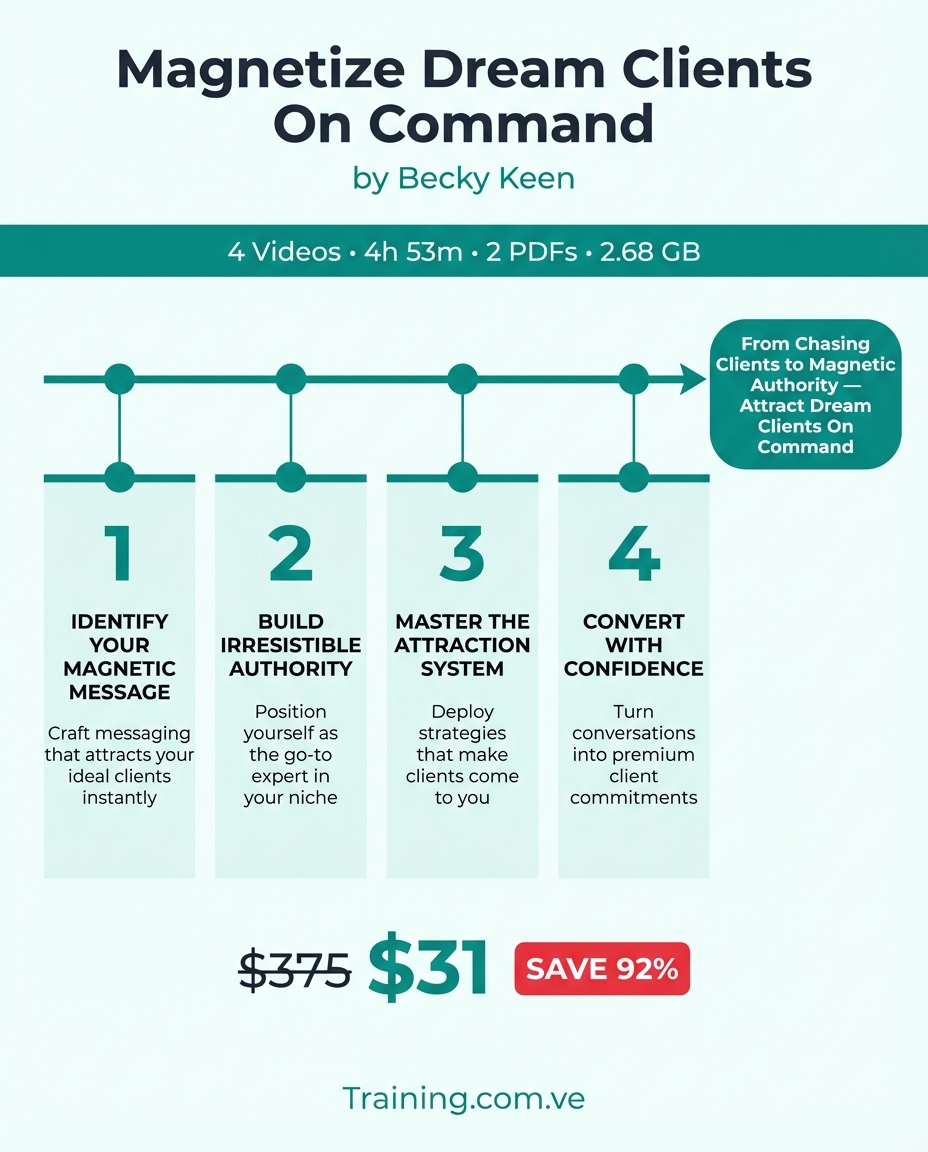
Common Mistakes
Mistake 1: Writing validation bullets in coach language. "Struggling with limiting beliefs around money" is not a validation bullet. It is a topic header. Validation bullets describe scenes, not categories. The test: could your ideal client have written this herself, in her own words, about her own Tuesday afternoon? If yes, it is a validation bullet. If it sounds like something from a coaching certification curriculum, rewrite it. Mistake 2: Leaving the method unnamed. The most common reason desire-method pairings fail is that the method half is vague: "I help you get clear on your messaging" instead of "we build your content strategy around the specific micro-moments your clients live through so your posts create recognition, not just information." The named method is what makes the pairing credible. Without it, the promise is indistinguishable from every other coach's promise. Mistake 3: Using "This is for you if" as a hype statement. "This is for you if you're ready to invest in yourself" screens for no one. It is a filler line that costs you credibility. "This is for you if" statements should make the wrong prospect self-select out. If everyone who reads it thinks it applies to them, it is not doing its job.The Structural Insight
The 4-Part Messaging Structure's value is not in any individual component. It is in the sequence. The sequence matches the internal decision-making process of a qualified prospect — first feel understood, then recognize your readiness, then see how the specific help works, then evaluate whether the logistics match your reality. That is how people actually buy. Not from information delivered in the order that feels intuitive to the seller.
Becky Keen's 4-Part Messaging Structure is one piece of a larger client attraction system — the tactical layer that only works when the internal layer is coherent. The other four frameworks in Magnetize Dream Clients On Command (the Coherence Model, the 4 A's Reprogramming Framework, the Four-Step Low-Ticket Offer Framework, and the Micro Problems Content Approach) each address a different dimension of the same problem. The complete independent breakdown of all five is at Course To Action.
Not a review. Not a rating. A complete framework-level analysis so you know exactly what you're buying — or whether you need to buy it at all — before you spend $375.
Before you spend $375, get the complete breakdown of every framework, what the course doesn't cover, and whether it's right for your specific situation.
- Free account, 10 summaries, no credit card required
- $49/month or $399/year gets you this plus 110+ other courses broken down the same way
- Ask the AI how any framework applies to YOUR coaching practice ("Apply to My Business" uses 3 credits)
- Read the breakdown or listen to the audio version — every summary and lesson is available as audio
Frequently Asked Questions
What is the 4-Part Messaging Structure? The 4-Part Messaging Structure is Becky Keen's four-step copy framework from Magnetize Dream Clients On Command. The four parts in sequence are: validation bullets describing the prospect's current reality in micro-detail, a transition statement acknowledging readiness, desire-method pairings showing exactly how you deliver each result, and container details plus "This is for you if" qualification statements. The sequence matches how qualified prospects actually make buying decisions. Is Magnetize Dream Clients On Command worth $375? For coaches and service providers whose content and offers are not converting qualified prospects, the program delivers five immediately applicable frameworks. The 4-Part Messaging Structure and Micro Problems Content Approach alone can change how you write every piece of sales copy. The limitation is that at 4.9 hours, no single framework gets exhaustive depth. For context, Course To Action's full breakdown of this course — plus 110+ others — costs $49, with a free account that includes 10 summaries and no credit card required. What does Magnetize Dream Clients On Command NOT cover? The program does not cover paid advertising, SEO, email automation, funnel mechanics, or platform-specific growth strategy. There are no templates or downloadable workbooks. The energetics framing is woven throughout all four sessions. It is not suited for B2B contexts, product businesses, or complete beginners without an existing offer. Who is the 4-Part Messaging Structure best for? This is best suited for coaches and service providers who have built offers, created content, and run discovery calls but are not consistently converting qualified prospects into clients. If your copy leads with logistics and buries the recognition element, this framework addresses that structural error directly. Where can I read a summary of Magnetize Dream Clients On Command? The complete independent breakdown — every framework, every session, and what the program does not cover — is available free at coursetoaction.com/.Get All Frameworks from Magnetize Dream Clients On Command
The course costs $375. The complete breakdown is $49/year — every course on the platform.
This is one framework. Course To Action has every framework, every lesson, and AI that applies it to your specific business. Read or listen — every summary has audio.
Start free — 10 full summaries, no credit card required