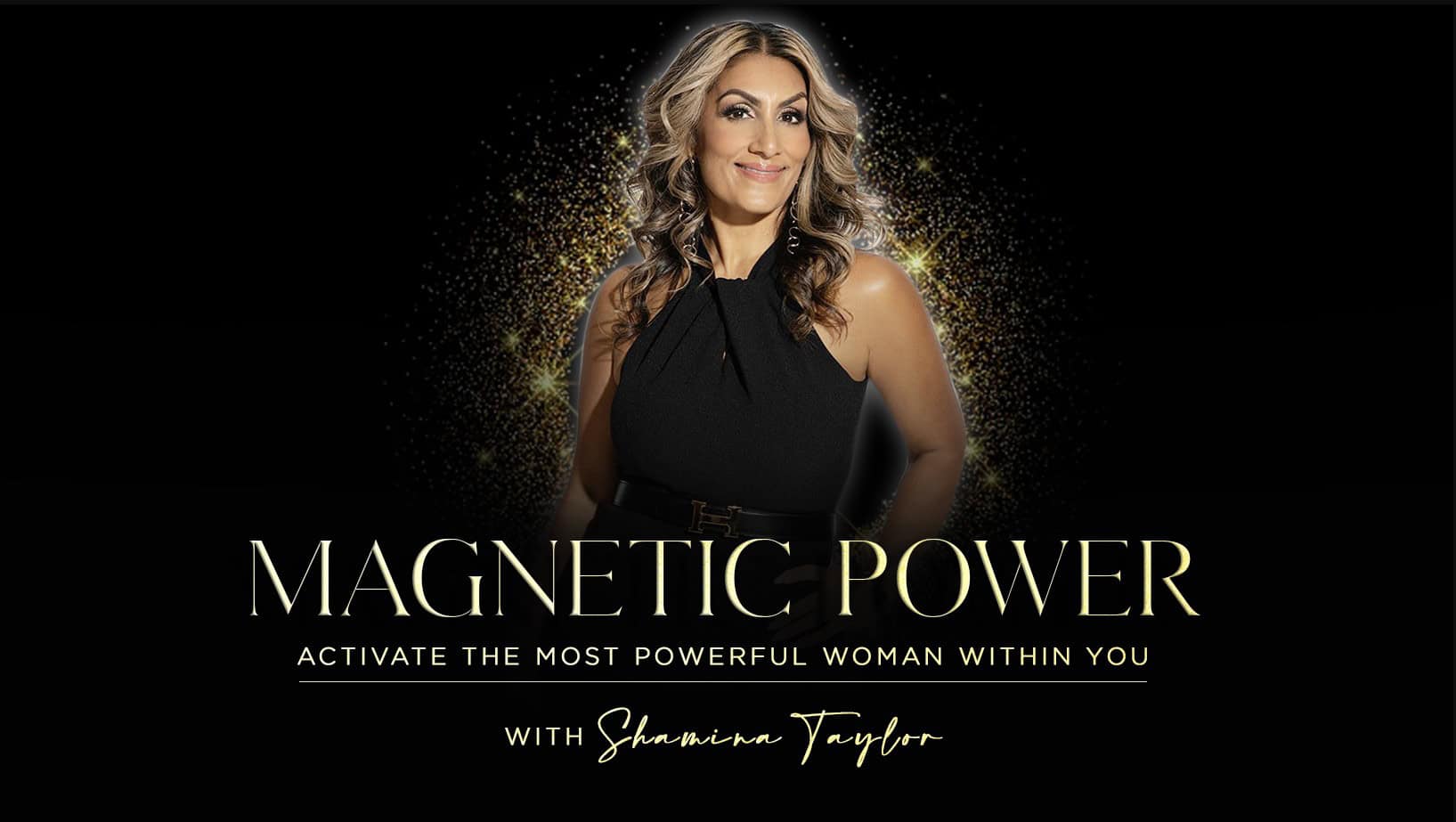
The Reporter vs. Poet Framework Explained: Stop Posting and Start Magnetizing — from Magnetic Power by Shamina Taylor
The Reporter vs. Poet Framework is Shamina Taylor's communication archetype model from her $999 program Magnetic Power. It is the most immediately deployable framework in the course, explaining why consistent posting produces inconsistent results for women entrepreneurs — and providing the exact shift that changes content from credential-listing to client-attracting. If you are posting consistently and still not converting, according to the full breakdown on Course To Action, this framework diagnoses exactly why.
Shamina Taylor — attorney turned $1M+ women's business coach, bestselling author, and host of The Unapologetically Rich Show — spent years in that exact loop before she understood the actual problem. It was not the strategy. It was not the posting frequency. It was not even the offer.
It was the mode she was communicating from.
What Is the Reporter vs. Poet Framework?
The Reporter vs. Poet model is a communication archetype framework developed by Shamina Taylor inside Module 2 of Magnetic Power. It describes two fundamentally different modes of storytelling: one that lists external facts and credentials (the Reporter), and one that takes the listener on an internal emotional journey (the Poet). The core insight is that Reporter-mode communication is a function of wounded masculine energy — analytical, controlled, credential-driven — and that it generates zero genuine connection regardless of how polished the content is. Poet-mode communication, by contrast, operates from feminine energy — emotional, vulnerable, experiential — and is the actual mechanism by which content converts to clients.
The model's central claim: what you share determines who you attract. And how you share it determines whether anyone responds at all.
The Core Components
The Reporter Archetype
The Reporter communicates from the outside in. She leads with credentials, achievements, certifications, client numbers, years in business, and methodology names. She lists what she does, who she has worked with, and what results she has produced. The communication is accurate and polished. It contains no lies, no exaggeration, no manipulation.
It also contains no connection.
The Reporter mode is a direct output of masculine energy communication: analytical, controlled, external, achievement-focused. It speaks to the rational mind of a potential client — "here is why I am qualified" — but it never reaches the emotional center where buying decisions are actually made. The content scrolls by because there is nothing in it for the reader to feel.
Taylor identifies this as the default mode for most high-achieving women. Women who have spent years building credentials, proving themselves, and operating in professional environments that reward facts over feelings tend to communicate their businesses the same way they communicated in boardrooms. The key takeaway is that technically impressive, emotionally inert content is the predictable output of Reporter mode.
The Poet Archetype
The Poet communicates from the inside out. She does not lead with credentials. She leads with experience — with the moment everything broke, with the specific thing she thought and felt and did when she was exactly where her ideal client is now. She takes the listener on a journey: here is where I was, here is what I went through, here is what I discovered on the other side, here is how it changed everything.
The Poet's story has three layers, as Shamina teaches it:
Origin story — where she came from. The version of herself before the transformation. The specific circumstances, the specific pain, the specific blind spots that made her who she was before she became who she is. This is not a trauma dump. It is an honest account of the starting point. Pivot moments — the specific experiences that changed the trajectory. Not "I decided to commit to personal development." Not "I hired a coach." The actual moment. The conversation that cracked something open. The failure that finally broke the armor. The realization that arrived at 2 a.m. and would not leave. Specific, sensory, named. Triumph stories — the place she is speaking from now. Not a highlight reel of accolades. The lived reality of what changed when she made the shift. What she can do now that she could not do then. What is available to her now. What her clients access through working with her.The Poet's content converts because it mirrors the reader's inner experience back at them. The reader does not read the post and think "she is qualified." They read it and think "that is me." And that recognition — that felt sense of being seen and understood — is what actually moves people toward buying.
This is one of 7 frameworks in Magnetic Power. The complete breakdown — every framework, every limitation — is available on Course To Action. Start free.
The Critical Distinction: Wound vs. Triumph
Taylor makes a crucial distinction inside the Poet archetype that most people miss. What makes this different from other storytelling frameworks is the separation between sharing your story from an active wound versus sharing it from triumph.
Sharing from an active wound means the pain is still unprocessed. The anger, the grief, the confusion — it is all still hot. When you share from this place, you attract people who are also in that hot, unprocessed state. People who cannot invest. People who are not ready to take action. You build an audience of commiseration partners rather than clients.
Sharing from triumph means you have metabolized the experience. You can speak about the darkness with specificity and honesty, but you are speaking from the other side of it. You are not in the wound — you are reporting from the place the wound led you to. This is what attracts clients who are ready to move. They see someone who has been where they are and come out transformed. That person has something worth buying.
The test, according to Taylor: can you tell the story without needing the listener's sympathy? If yes, you are sharing from triumph. If you are hoping they will understand how hard it was, you are sharing from the wound.
Real Example: The Same Story, Two Different Results
A health coach has a story about recovering from burnout. She was a corporate attorney working 80-hour weeks, ignored her body for years, ended up with adrenal exhaustion, and rebuilt her health through functional medicine and nervous system work. It is a genuinely powerful story.
Reporter version: "I'm a certified health coach with a background in corporate law. I specialize in burnout recovery and nervous system healing for high-achieving women. I use a science-backed approach combining functional medicine principles and somatic work. I've helped 30+ clients reduce cortisol and increase energy levels." Poet version: "I was sitting in a partner meeting at 11 p.m. on a Tuesday, running through the same deck for the fourth time, and I could not feel my own hands. I thought it was stress. I told myself one more year. My body had already decided it was done — I just hadn't gotten the memo yet. Three months later I was sleeping 12 hours and still exhausted, finally sitting in a functional medicine doctor's office hearing words like 'adrenal insufficiency' and wondering how I had let it get this far. I know what it feels like to build your whole identity on your output — and then have that be the exact thing that nearly takes you out."Same credentials. Same expertise. The most important framework to grasp is this: the second version generates DMs while the first generates polite scrolling.
Get Every Framework from Magnetic Power
The course costs $999. All frameworks extracted — $49/year.
Start free — 10 full summaries, no credit card
How to Apply This This Week
Step 1: Audit your last 10 posts. Go back through your last 10 pieces of content — posts, emails, stories — and categorize each one: Reporter or Poet? Look for patterns. Most women find they are operating in Reporter mode 8 or 9 times out of 10. Step 2: Write your three-layer story. Take 30 minutes and do a brain dump of your personal story. Origin: where did you start? Pivot moments: what 2-3 specific experiences changed your direction? Name them with sensory detail — the place, the moment, the thing that was said or realized. Triumph: where are you now, and what is specifically different? Step 3: Write one Poet post and publish it. Take one pivot moment from your story. Write it from the inside out. Lead with the experience, not the credential. Do not mention your methodology or program name until the end, if at all. Post it today. Not when it is perfect. Today. The Field of Dreams principle Taylor teaches: committing to the message before it is fully formed is how it refines itself.Common Mistakes
Mistake 1: Performing vulnerability instead of embodying it. The Poet archetype requires genuine emotional access — not a performance of openness. Women who have spent years in professional environments often write "vulnerable" content that is actually still quite controlled and curated. The reader can feel the difference. Real Poet content comes from something you actually lived, described in the way you actually experienced it, not the polished version you would present on a panel. Mistake 2: Sharing from the active wound. This is the most common misapplication of the framework. A coach who is still in the middle of a divorce posts about her divorce. A business owner who just lost a major client posts about the grief of that loss. The content is raw and real — but it is raw from an unhealed place, and it attracts people who are also raw and unhealed and not ready to invest. The Poet shares difficult material. The distinction is that the Poet has come through it. Mistake 3: Making the story about yourself instead of the reader. The Reporter's story is about her credentials. The Poet's story is actually about the reader. The purpose of the origin story, the pivot moments, the triumph narrative — all of it — is to hold up a mirror so the reader sees themselves. The moment the story becomes about how impressive the journey was rather than how recognizable it is, it stops being Poet work.The Shift That Changes Everything
In summary, the Reporter vs. Poet framework is not a copywriting hack. It is a diagnosis of the energy you are bringing to your communication.
Reporter energy is controlling, achievement-focused, and seeking external validation through credentials. It communicates "here is why you should trust me" — which, paradoxically, generates very little trust. Poet energy is open, experiential, and grounded in lived truth. It communicates "I have been where you are" — which generates the kind of felt recognition that converts to clients, referrals, and a business that does not require you to hustle for attention.
Shamina Taylor left a 20-year career as an attorney after a spiritual awakening, built to $1M+ annual revenue, and has helped over 51 clients reach millionaire status. Her own story — from the courtroom to the coaching room, from masculine armor to magnetic power — is the living proof of the Poet model in practice. She did not build her business by listing her legal credentials. She built it by telling the truth about her experience in a way that made other women feel recognized.
That is the framework. Not in theory. In practice.
The course costs $999. The complete breakdown of all 6 frameworks — plus 110+ other premium courses — is available on Course To Action for $49/30 days. Free account, 10 summaries, no credit card. Every summary includes audio. The AI advisor applies these frameworks to YOUR business — 3 credits free.
Frequently Asked Questions
Is Magnetic Power worth $999? For women entrepreneurs at $100K–$500K who have the strategy but feel energetically blocked, yes. The 6 named frameworks address the internal layer that most business courses cannot reach. If you are pre-revenue or need tactical marketing systems, it is the wrong investment. What does the Reporter vs. Poet framework actually teach? The Reporter vs. Poet model is Shamina Taylor's 3-layer communication system for shifting content from credential-listing (Reporter mode) to emotional storytelling (Poet mode). The three layers are: origin story, pivot moments, and triumph stories. The framework includes the wound vs. triumph distinction that determines whether your content attracts commiseration partners or paying clients. What does Magnetic Power NOT cover? Magnetic Power does not teach lead generation, funnel architecture, paid traffic, email marketing, or technical marketing systems. The delivery is live coaching call recordings with no slides, workbooks, or structured implementation guides. The content is built for women in coaching and personal development industries. Who is Magnetic Power best for? Women entrepreneurs in coaching, healing, or personal development at $100K–$500K annual revenue who have invested in strategy courses and still feel blocked. The course is explicitly designed for women's experience and uses feminine energy, somatic, and spiritual frameworks throughout. Where can I read a full summary of Magnetic Power? The complete framework-level breakdown — every lesson, every framework, and honest limitations — is available free at Course To Action: coursetoaction.com/. Course To Action publishes independent framework-level breakdowns of online courses — the 20% that delivers 80% of the value, so you can make an informed decision before you spend a dollar.Get All Frameworks from Magnetic Power
The course costs $999. The complete breakdown is $49/year — every course on the platform.
This is one framework. Course To Action has every framework, every lesson, and AI that applies it to your specific business. Read or listen — every summary has audio.
Start free — 10 full summaries, no credit card required