
The Main Character Movie Framework Explained: Stop Performing for an Imaginary Audience — from Magic On Legs by Melanie Ann Layer
The Main Character Movie Framework is Melanie Ann Layer's 4-component method for dismantling the performance habit that suppresses feminine magnetism. It is the foundational framework inside Magic On Legs, Layer's $777 course on feminine magnetism — 7 lessons, 9 hours of content. The framework is built on one counterintuitive premise: the more energy you spend trying to matter to people, the less magnetic you become, because you are performing for an audience that is largely imaginary. The complete course breakdown is available on Course To Action.
There is a particular kind of exhaustion that high-achieving women know intimately. It is not the tiredness of doing too much work. It is the tiredness of performing — of scanning every room for how you are landing, of editing yourself before you speak, of replaying conversations afterward to calculate whether you said the right thing.
Layer has a precise diagnosis for this state. You are trying to be the main character in everyone else's movie. And you cannot do it, because you were never cast.
The Setup: What We Are Actually Doing When We Perform
Most self-improvement frameworks treat anxiety about other people's opinions as a habit to be broken or a fear to be overcome. The core insight is that Layer's framework does something different: it treats the behavior as a logical error.
When you walk into a room and immediately scan for how people are perceiving you, you are operating from an implicit assumption — that you occupy a central role in the mental life of the people around you. That you are, in some meaningful sense, a main character in their story.
Layer's intervention is not to tell you to care less. It is to tell you that the assumption is factually wrong.
Every person in that room is the main character of their own movie. Their attention, their concerns, their internal narrative — all of it is occupied by their own plot. Their own relationship tension they had this morning. Their own business problem they are turning over. Their own insecurity about how they are landing in the room. The mental bandwidth available to think about you — carefully, critically, with sustained attention — is almost zero.
The liberating truth Layer names: you do not matter much to most people. Not because you are not valuable. But because everyone is too busy being the main character of their own film to give you a sustained supporting role in theirs.
The Framework's Four Components
Component 1: The Movie Metaphor as Structural Reality
The Main Character Movie Framework begins with a very specific claim about attention and cognition. Each person is, at all times, the protagonist of their own internally running narrative. They have a backstory, a current plot, conflicts, desires, and a subjective experience of events that is entirely about their movie, not yours.
When two people are in the same room, they are not watching the same film together. They are each watching their own, and the other person is at most a minor character — possibly interesting, possibly unremarkable, but never the point.
Layer's application of this is not motivational. It is diagnostic. If you are spending significant energy managing how you appear in other people's movies, you are spending energy that can never pay off, because you are not actually appearing in their movies the way you imagine. The surveillance you feel is mostly self-generated. The critical audience you are performing for is largely fictional.
Component 2: The Energy Audit
The key takeaway from this component is understanding what happens to your energy when you operate from the wrong assumption.
When you believe you are a main character in other people's movies, a specific kind of internal labor runs in the background continuously. Layer describes it as a split in attention — part of you is living your actual life, and part of you is watching yourself live it through imagined eyes. That second, watching part is calculating: Does this make me seem too much? Not enough? Likable? Capable? Intimidating? Weak?
That background process is expensive. It draws from the same reservoir that creativity, presence, and genuine connection draw from. You cannot be fully in your own life and simultaneously managing your perceived role in someone else's. The two are structurally incompatible.
What Layer calls magnetism — the quality that makes some women compellingly present, that makes others want to be near them without being able to explain exactly why — comes from being fully inhabited in your own movie. Ironically, the woman who is least concerned with whether she is interesting is often the most interesting person in the room, because all of her energy is present. Nothing is being siphoned into the performance.
Component 3: The Liberating Insignificance
This is the component that requires the most sitting with, because it goes against years of social conditioning that equates being noticed with being valuable.
What makes this different from typical self-help advice is Layer's framing: the fact that you do not matter much to most people is not a tragedy. It is a release.
If you genuinely internalize that the person who judged you at the networking event has already forgotten the exchange, that the woman who seemed to roll her eyes is running three competing anxieties of her own, that the client who did not respond is not crafting a silent verdict about your worth — you are freed. Freed from the surveillance. Freed from the performance. Freed to redirect that enormous reservoir of energy into actually inhabiting your own life, building your own thing, being the main character of your own movie with full presence.
Layer is direct about what this shift feels like: it feels like setting down a weight you had been carrying so long you forgot it was heavy.
Component 4: Main Character Energy as the Source of Magnetism
The framework closes the loop by connecting the release of performing with the emergence of genuine magnetism.
When you are no longer scanning for how you are perceived, when you are no longer editing yourself to be more palatable, when you have accepted your insignificance in everyone else's movie — something changes in how you hold yourself. Layer describes this as Main Character Energy. Not performed confidence. Not aggressive self-assertion. Something quieter and more powerful: the quality of someone who is completely at home in her own narrative.
This is best suited for women who sense that their presence does not match their capability — who have the skills, the track record, and the results, but lack the effortless pull that makes rooms shift. Main Character Energy is not something you add. It is what remains when the performance stops.
This is one of 7 frameworks in Magic On Legs. The complete breakdown — every framework, every limitation — is available on Course To Action. Start free.

A Real Example: The Room-Entering Moment
Consider the experience of walking into a room full of people you do not know — a workshop, a conference, a dinner party.
Performing from the wrong assumption: You enter, and immediately a background process activates. How am I landing? Do I look like I belong? Is anyone judging my outfit? Am I making eye contact at the right level — not too eager, not too detached? You spend the next ten minutes in a state of low-grade surveillance, calibrating your presentation to an imagined audience. By the time you sit down, you are already drained, and you have not actually connected with anyone.
Operating from the Main Character Movie Framework: You enter the same room. But the background assumption is different. You understand that everyone in this room is the main character of their own movie and has approximately zero cognitive bandwidth dedicated to sustained judgment of you. Your job is not to manage their perception. Your job is simply to be present in your own experience. What are you curious about? Who looks interesting to you? What do you actually want from this evening? Your attention is on your own movie. And paradoxically, this is the version of you that other people find most worth knowing.
Get Every Framework from Magic On Legs
The course costs $777. All frameworks extracted — $49/year.
Start free — 10 full summaries, no credit card
How to Apply the Framework
Step 1: Catch the performance in real time. Notice when you are operating from the background surveillance process. The signal is a split in your attention — part of you experiencing the moment and part of you watching yourself experience it. You do not need to force the watching part to stop. Simply naming it is often enough to reduce its volume. Step 2: Return the question to your own movie. Redirect the attention from "how am I landing?" to "what is actually happening in my experience right now?" This is not selfishness. It is re-inhabiting your own narrative. What do you actually think of this person? What do you genuinely want from this conversation? What is interesting to you? Step 3: Practice the insignificance reframe. When you catch yourself replaying a social exchange — did I say the right thing, did they judge me, did I come across wrong — apply the framework directly. That person is the main character of their own movie. You were a brief scene, if that. The version of events you are running in your mind has almost no correspondence to what is actually occupying their attention right now. Step 4: Let the magnetism be a byproduct. Do not try to be magnetic. That is another performance. Focus entirely on being genuinely present in your own experience. In summary, the magnetism Layer argues for is what happens naturally when the performance stops.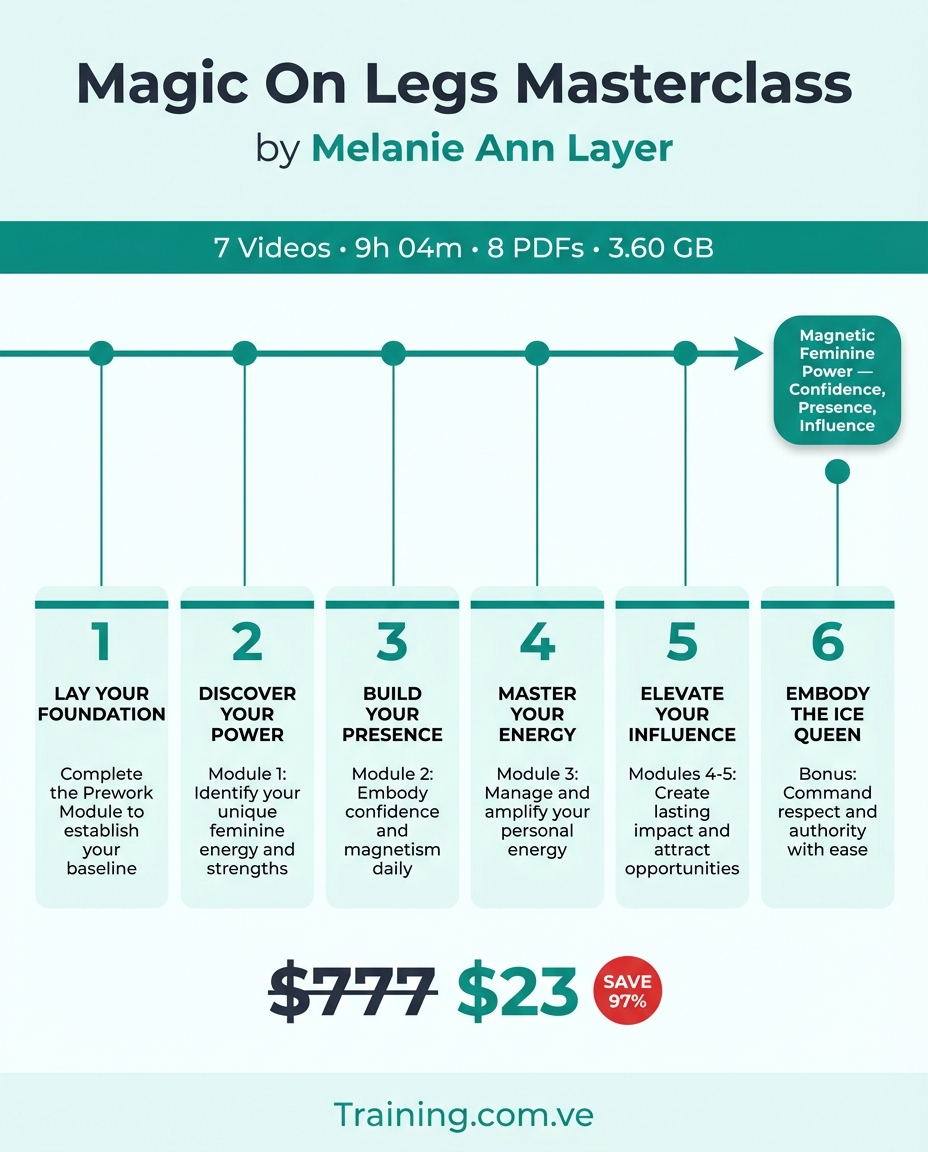
Common Mistakes
Mistake 1: Confusing the framework with not caring about people. The Main Character Movie Framework is not an argument for solipsism or indifference to others. Caring about people is different from monitoring how they perceive you. You can be deeply interested in someone's experience, genuinely warm and generous, fully present in a relationship — all without the background surveillance process running. The framework is about liberating attention from the performance, not from connection. Mistake 2: Using the framework as a performance of confidence. This is the most seductive misapplication. The woman who has half-internalized the idea may start performing the role of someone who does not care what people think — which is still a performance, and still operating from the assumption that the audience is watching. Genuine application is quiet. It is not a posture. It is a shift in the internal assumption that gradually changes everything downstream. Mistake 3: Expecting the shift to be immediate. The main limitation of this framework is that it addresses identity change, not tactical adjustment. The surveillance habit has likely been running for years. Interrupting it is a practice, not a single insight. The framework gives you a new assumption to return to. The work is in returning to it consistently enough that it becomes the default.Frequently Asked Questions
What is the Main Character Movie Framework? The Main Character Movie Framework is Melanie Ann Layer's 4-component method for dismantling the performance habit that suppresses feminine magnetism. It teaches that every person is the protagonist of their own internally running narrative, and the energy spent trying to matter in other people's stories is the exact energy that magnetism runs on. Is the Main Character Movie Framework the same as not caring about people? No. The framework distinguishes between caring about people (genuine connection) and monitoring how they perceive you (performance). You can be deeply warm, generous, and connected without running the background surveillance process that drains your presence. How long does it take the Main Character Movie Framework to work? The framework addresses identity-level change, not tactical adjustment. The surveillance habit has typically been running for years, so interrupting it is a practice rather than a single insight. Most women report gradual shifts over weeks of consistent application rather than an immediate transformation. What other frameworks does Magic On Legs teach? Magic On Legs includes 7 frameworks total: the Main Character Movie Framework, the Ice Queen Identity, the Oxytocin Self-Generation Framework, Mother vs Muse Energy, the Overflow Principle, Emotional Rationing vs All-In Processing, and the Compounded Emotions Framework. Each addresses a different mechanism of magnetism suppression.The Bigger Picture
The Main Character Movie Framework is one component inside Magic On Legs, a seven-lesson, nine-hour course that also teaches the Ice Queen Identity, the Oxytocin Self-Generation method, the Overflow Principle, and the distinction between Performative and Authentic Energetics. Together, these frameworks build a comprehensive model of feminine magnetism — not as something you perform or cultivate, but as something you uncover when you stop suppressing it through the exhausting work of managing other people's perceptions.
For women entrepreneurs who have built careers on being capable and reliable, the most important framework shift this course offers arrives as permission. Permission to stop performing. Permission to be the main character. Permission to be significant — in your own movie, which is the only place that significance was ever real.
The course costs $555. The complete breakdown of all 7 frameworks — plus 110+ other premium courses — is available on Course To Action for $49/30 days. Free account, 10 summaries, no credit card. Every summary includes audio. The AI advisor applies these frameworks to YOUR situation — 3 credits free.
Course To Action publishes independent framework-level breakdowns of online courses — the 20% that delivers 80% of the value, so you can make an informed decision before you spend a dollar.Get All Frameworks from Magic On Legs
The course costs $777. The complete breakdown is $49/year — every course on the platform.
This is one framework. Course To Action has every framework, every lesson, and AI that applies it to your specific business. Read or listen — every summary has audio.
Start free — 10 full summaries, no credit card required