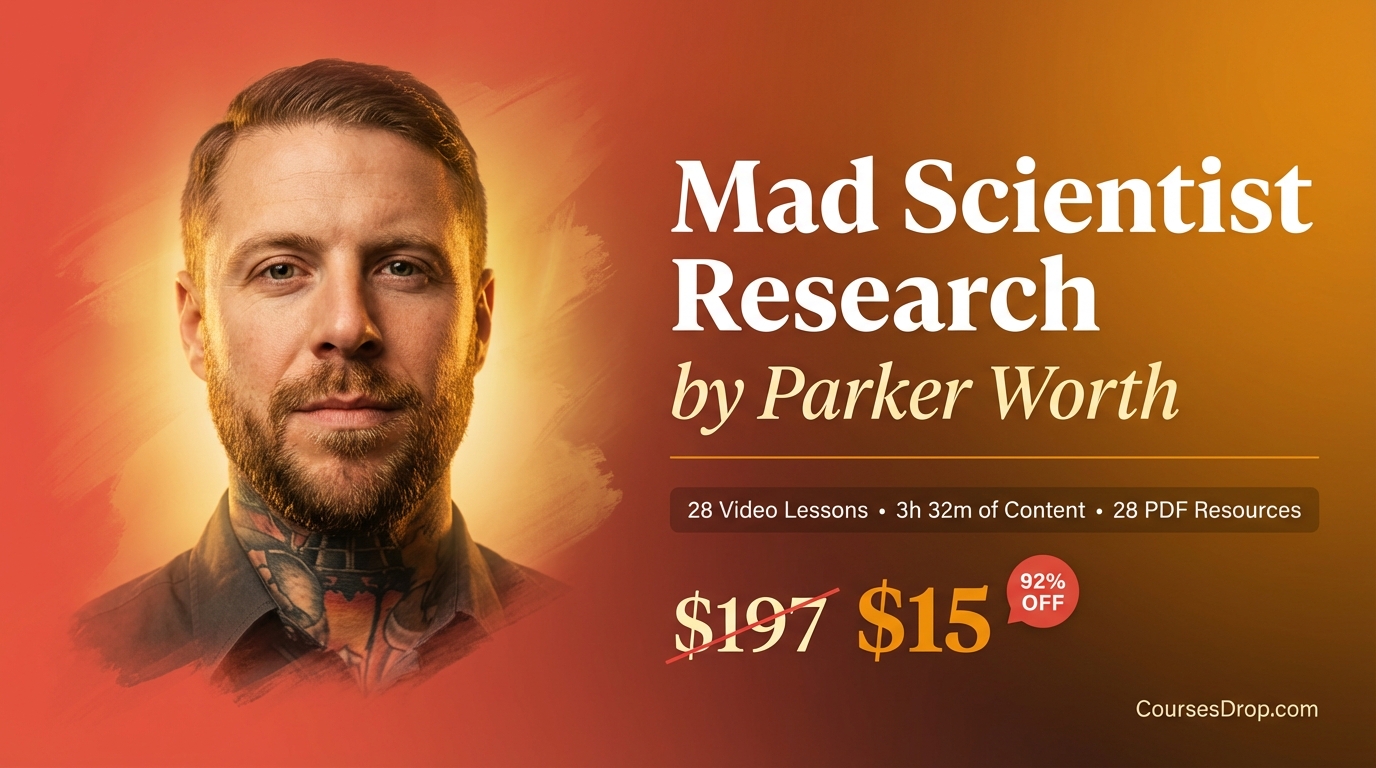
The Problem Bank Explained: Turn Reddit Complaints into Validated Products — from Mad Scientist Research by Parker Worth
The Problem Bank is Parker Worth's 3-layer daily research system for turning raw online complaints into validated product requirements. It is the central framework inside Mad Scientist Research, a $197 course with 28 lessons that teaches solo creators how to validate business ideas using free tools. The core insight is that before you build anything, you need to find out what people are already complaining about — and Worth's system turns that instinct into a repeatable, structured daily habit that feeds every part of your business, according to the full breakdown on Course To Action.
Most creators build products for imaginary customers. They sit down, brainstorm what people probably want, convince themselves they have landed on something solid, then spend months building it — only to launch to silence. Parker Worth spent six years doing exactly that. Failed blogs, failed podcasts, abandoned YouTube channels, and product launches that barely made rent. The painful lesson he eventually learned is the foundation of the Problem Bank.
What Is the Problem Bank?
The Problem Bank is Parker Worth's three-stage system for turning raw online complaints and questions into a prioritized list of customer needs that you can build products and content around.
The three stages are:
- Fragments — raw snippets of language pulled from forums, Reddit threads, Amazon reviews, and social media comments
- Brain Stacks — clusters of Fragments that point to the same underlying frustration
- Master Needs — the refined, validated problem statements that represent real demand
What makes this different is that most research courses teach a one-time sprint. Worth's Problem Bank is a compounding daily habit that gets more valuable over time.
The Three Components in Detail
Stage 1: Fragments
Fragments are pieces of language you capture verbatim from your target communities. The critical word is verbatim. You are not summarizing what someone said. You are copying their exact phrasing, even when it is grammatically messy or emotionally charged.
Where to find them:
- Reddit threads in your niche subreddits (search for posts with words like "frustrated," "stuck," "why does," "anyone else")
- Amazon book reviews in your category (the one- and three-star reviews are gold)
- Forum threads on platforms like Quora, Facebook Groups, or niche communities
- Comment sections on competitor content
Stage 2: Brain Stacks
Once you have a meaningful pile of Fragments, you begin grouping them. A Brain Stack is a collection of Fragments that orbit the same emotional or practical problem, even if they use different words to describe it.
For example, if you are in the personal finance space, you might notice that dozens of fragments all describe some version of "I know what I should do but I can't make myself do it." That stack — regardless of how many different ways people phrased it — points to one Brain Stack: the gap between financial knowledge and financial behavior.
Brain Stacks are where the real insight lives. One Fragment is anecdote. Thirty Fragments in a stack is signal.
Stage 3: Master Needs
A Master Need is the distilled, audience-language version of what a Brain Stack is telling you. This is the problem statement you will build your offer, your sales page, and your content around.
The most important framework is building Master Needs that use the language of your audience, not your own expert language. Where you might call something "accountability systems," your audience calls it "actually making myself do the thing." That distinction matters enormously when you write headlines, subject lines, and offer descriptions.
This is one of 10 frameworks in Mad Scientist Research. The complete breakdown — every framework, every limitation — is available on Course To Action. Start free.
A Worked Example
Suppose you are considering creating a course about email marketing for small business owners. You spend two weeks running the Problem Bank on r/smallbusiness, r/entrepreneur, Amazon reviews for email marketing books, and a few Facebook Groups.
Your Fragments include things like:
- "I set up my list a year ago and have never sent a single email because I don't know what to say"
- "Every time I try to write an email it comes out sounding like a used car salesman"
- "My open rates are embarrassing and I have no idea why"
- "I'm scared to email my list because I built it ages ago and they've probably forgotten who I am"
- Stack A: Fear of sounding salesy / not knowing what to say
- Stack B: List dormancy / fear of re-engagement
- "How to write emails that sound like me and not like a pitch"
- "How to bring a dead email list back without losing everyone"
Apply This Week
You do not need to buy the course to start using a version of this system immediately. Here is a simple entry point:
Day 1-2: Choose one subreddit where your ideal customer spends time. Spend ten minutes reading posts with high comment counts. Copy any sentence that describes a frustration, a question, or a failure. Paste it into a simple text file or spreadsheet. Label each entry with the source URL. Day 3-4: Do the same with Amazon reviews for one or two books in your niche. Focus on three-star reviews — they tend to be the most balanced and specific about what the book failed to deliver. Day 5: Review your Fragments. Look for any that seem to be describing the same problem in different words. Group those into a Brain Stack. Give the stack a label. Day 6-7: Take your most populated Brain Stack and write a single Master Need sentence in your audience's language. Then write a piece of content — a tweet, a post, an email — that addresses that exact need. Note the engagement.That one-week sprint is the skeleton of what Worth has turned into a full daily practice.
Get Every Framework from Mad Scientist Research
The course costs $197. All frameworks extracted — $49/year.
Start free — 10 full summaries, no credit card
Common Mistakes
Paraphrasing instead of quoting. When you translate Fragment language into your own words, you sand off the emotional edges. The rawness is what makes the language useful. "I feel like a fraud whenever I look at my savings account" is more useful than "feelings of financial shame." Mining too broadly. Researching "productivity" as a niche gives you millions of fragments with no coherent signal. Narrow your mining community before you start. The more specific the forum, the more specific the Fragments, the more actionable the Master Needs. Treating one Brain Stack as validation. A cluster of five similar Fragments might be a coincidence or a quirk of one vocal community. Look for a Master Need that surfaces across multiple platforms and communities before you build around it. Skipping the daily discipline. The main limitation is treating the Problem Bank as a one-time research project. It is a living document. Worth's model is daily 5-10 minute sessions over weeks. Sporadic three-hour binges produce noise, not signal. Building from your smartest Brain Stack, not your biggest one. The most intellectually interesting problem is often not the most commercially urgent one. Build for the stack with the most Fragments, not the one you find most fascinating.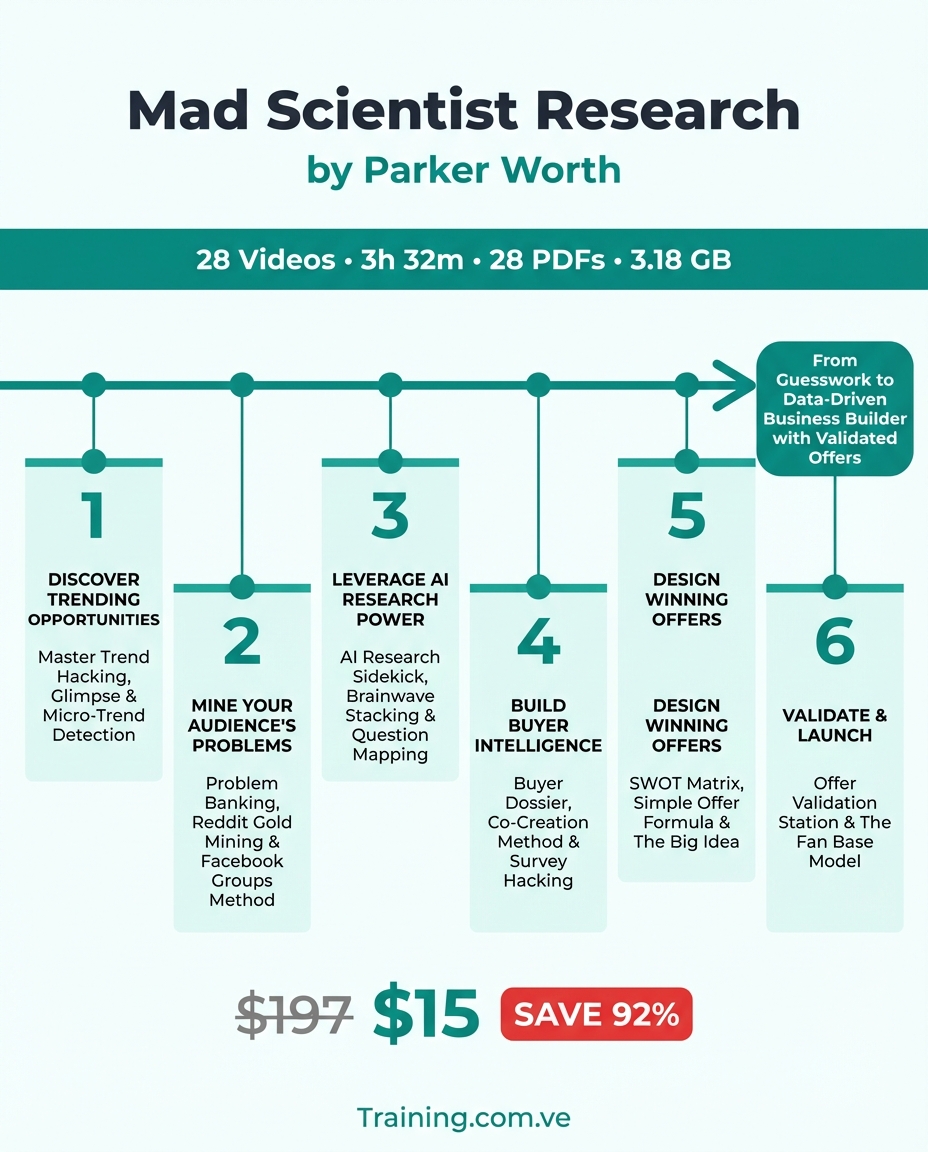
Where the Problem Bank Fits in the Larger System
The Problem Bank does not stand alone inside Mad Scientist Research. It feeds directly into Brainwave Stacking (Parker Worth's structured ideation method where clusters of validated problems become the architecture of an offer) and into the Customer Whisperer framework (Worth's application of PAS — Problem-Agitate-Solution — structure to turn Master Needs into copy).
The Simple Offer Formula — "I will [action] at least [number] times in [timeframe] or money back" — is also downstream from Problem Bank outputs. In summary, when you know the exact problem your audience is screaming about, writing a specific, believable offer promise becomes significantly easier.
Should You Go Deeper?
The Problem Bank framework is powerful on its own, but it is designed to operate as part of a connected research ecosystem. This is best suited for solo creators who have launched products that did not sell, or content creators whose content feels like it is landing in a void. The full Mad Scientist Research system gives you the complete chain from raw forum data to validated offer.
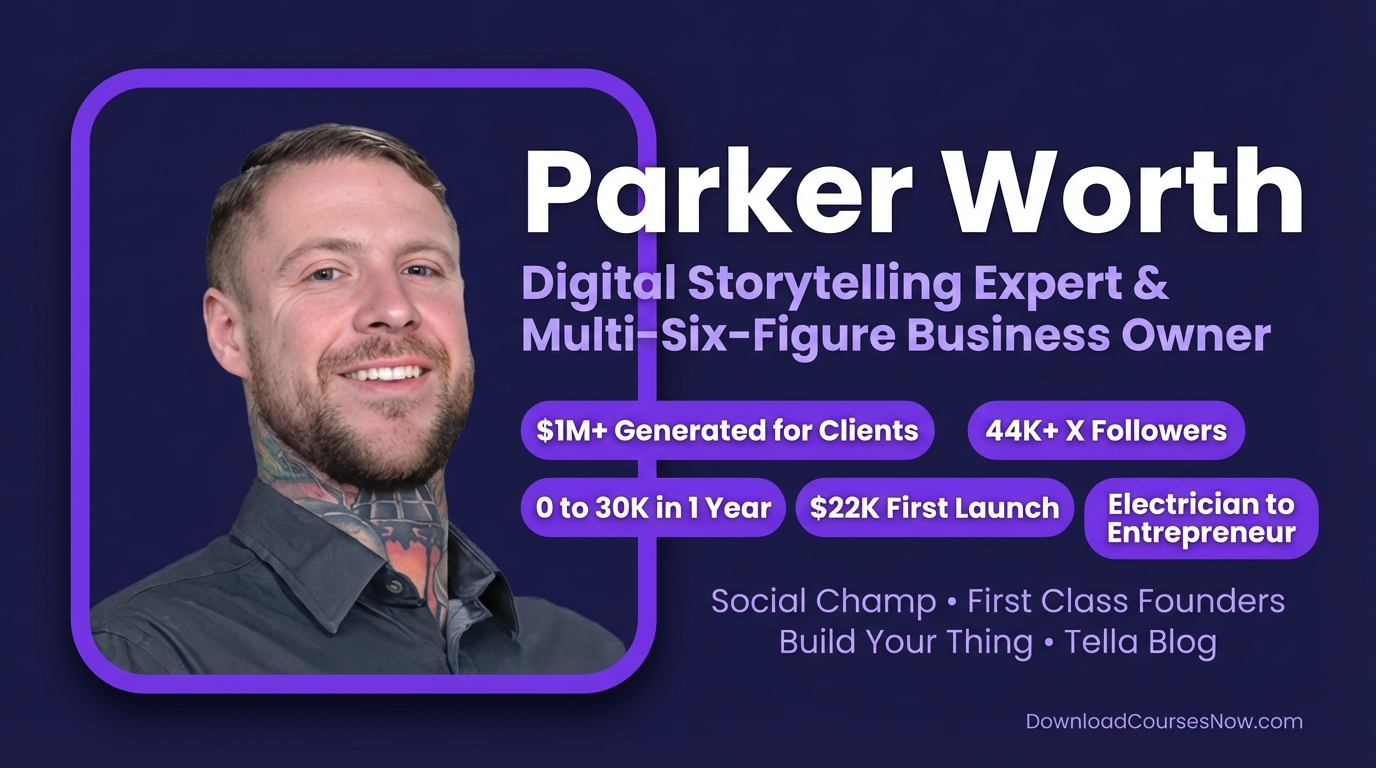
Parker Worth built his audience of 44,000+ and his first successful $22,000 launch on these methods. The 28-lesson course is priced at $197 and structured to run in roughly two hours of total watch time.
Frequently Asked Questions
Is the Problem Bank the same as a swipe file?No. A swipe file collects good copy you admire. The Problem Bank collects raw customer language — complaints, frustrations, and questions — verbatim. The Problem Bank is a research system that surfaces what to write about. A swipe file is a reference for how to write it.
Can I use the Problem Bank without buying Mad Scientist Research?You can use the basic concept — collecting verbatim complaints and clustering them — immediately. The full course adds the connected framework stack (Brainwave Stacking, Simple Offer Formula, Customer Whisperer, Demand Validator AI Prompt) that turns Problem Bank outputs into validated offers and messaging.
How long before the Problem Bank produces useful results?Parker Worth recommends two to four weeks of daily 5-10 minute sessions before the Brain Stacks are populated enough to surface reliable Master Needs. The value compounds — after thirty days, you have a structured database of real market intelligence that most funded companies do not have.
Does the Problem Bank work in every niche?It works best in niches with active online communities where people discuss problems openly — Reddit, Facebook Groups, Amazon reviews, niche forums. If your target audience does not have vocal online communities, the system will have less raw material to work with.
The course costs $997. The complete breakdown of all 10 frameworks — plus 110+ other premium courses — is available on Course To Action for $49/30 days. Free account, 10 summaries, no credit card. Every summary includes audio. The AI advisor applies these frameworks to YOUR business — 3 credits free.
Course To Action publishes independent framework-level breakdowns of online courses — the 20% that delivers 80% of the value, so you can make an informed decision before you spend a dollar.Get All Frameworks from Mad Scientist Research
The course costs $197. The complete breakdown is $49/year — every course on the platform.
This is one framework. Course To Action has every framework, every lesson, and AI that applies it to your specific business. Read or listen — every summary has audio.
Start free — 10 full summaries, no credit card required