Sequential Leverage Explained: Build a Business Without Capital — from Deal Making Session 2025 by Jay Abraham
Sequential Leverage is Jay Abraham's framework for building businesses without upfront capital by reversing the conventional business formation sequence. It is the most immediately actionable framework in Deal Making Session 2025, a $5,000 course by Jay Abraham that teaches 9+ partnership deal-making frameworks across 19 sessions and 37.3 hours of content. The core premise: secure the distribution agreement first, then use that agreement as leverage to source the product. The agreement is the asset, not the product.
Most businesses fail before they start — not because the idea is wrong, but because the sequence is wrong.
The conventional path looks like this: you develop a product, you find distribution, you sell to customers. That sequence sounds logical. In practice, it is a trap. You cannot get retail shelf space without proven sales volume. You cannot prove sales volume without shelf space. You cannot get supplier terms without a committed buyer. You cannot commit to a buyer without supplier terms. The chicken-and-egg problem is not a metaphor. It is the actual structure of conventional business formation — and it is specifically designed to favor people who already have capital, relationships, and a track record.
Jay Abraham has spent decades finding the structural weak points in that sequence and building businesses — and teaching others to build businesses — by reversing it entirely. The framework he teaches in Deal Making Session 2025 is called Sequential Leverage. What makes this different from other deal-making methods is that it eliminates the need for upfront capital at each stage by using each completed agreement as leverage for the next.
What Is Sequential Leverage?
Sequential Leverage — sometimes called the Agreement-First Methodology — is a framework developed and taught by Jay Abraham for structuring zero-capital or near-zero-capital business entry through the deliberate reversal of conventional business sequence.
The core insight is this: the agreement is the asset, not the product. In conventional business formation, you build or source the thing first, then find somewhere to sell it. In Sequential Leverage, you secure the distribution agreement first, then use the existence of that agreement as proof-of-concept leverage to convince suppliers to provide the product — often on trust, consignment, or deferred terms. The product comes last because the agreement, once secured, makes the product both necessary and fundable.
This is not a negotiation tactic. It is a structural reordering of the entire business formation sequence that eliminates the need for upfront capital at each stage by using each completed agreement as leverage for the next.
The Core Components
Step 1: Identify the Distribution Chokepoint
Every market has a chokepoint — a place where product and buyer must meet. In retail, it is shelf space. In services, it is the client relationship. In media, it is the audience. In institutional sales, it is the procurement relationship. Sequential Leverage starts not with the product, but with the chokepoint.
The first question is not "what can I sell?" It is "who controls access to buyers, and what do they need?"
Distribution owners — retailers, platforms, aggregators, channels — have a constant, structural problem: they have the buyers but they need the product flow to monetize those buyers. They need products that move, that meet margin requirements, that satisfy customer demand. They are looking for solutions to this problem continuously. This is your entry point.
Step 2: Secure the Agreement Before You Have Product
Approach the distribution owner with a proposition structured around their problem, not yours. You are not asking for shelf space. You are offering to solve their sourcing problem for a specific category. The conversation is about what they need, what metrics they care about — margin, velocity, minimum quantities — and whether you can meet those specifications.
When they agree to take your product under those terms, you have created the asset. Not the product. The agreement.
This agreement has specific properties that make it useful as leverage in the next step:
- It is documented proof that a buyer exists at a defined price point
- It specifies volume, margin, and terms — the exact inputs a supplier needs to assess viability
- It eliminates the supplier's primary risk: the risk that there is no buyer
Step 3: Use the Agreement to Source the Product
Now you go to suppliers — manufacturers, wholesalers, producers — with a fundamentally different conversation than every other buyer they encounter. You are not asking them to produce speculatively. You are presenting them with a committed purchase order or a distribution agreement from an established channel, and asking them to fulfill it.
The supplier's calculus changes completely. They are not being asked to produce on spec and hope a buyer emerges. The buyer is already contracted. Their primary question — will this move? — has already been answered by someone else. The remaining questions are operational: can they produce it, at what cost, and on what terms?
This is where deferred payment, consignment arrangements, and extended terms become available — not because you negotiated cleverly, but because the structure of the deal makes them rational. The supplier is not taking a risk on you. They are taking a manageable operational risk on a transaction that already has a committed buyer.
Step 4: Execute and Establish the Iteration
Once the first cycle completes — distribution agreement secured, product sourced on favorable terms, delivery made, payment received — you have something more valuable than the profit from that transaction. You have a track record. The distribution owner has seen you perform. The supplier has seen you deliver. Both relationships now have a history of successful transactions, which is the foundation Jay Abraham calls Relationship Capital.
The key takeaway is that this track record becomes the leverage for the next cycle, the next agreement, the next supplier relationship, the next distribution channel — each one building on the credibility established by the last.
Real Example: The Eight-Track Business
Jay Abraham's illustrative case from Deal Making Session 2025 is the eight-track tape business he built in an earlier era of his career.
The product was eight-track tapes — a distribution format for music that had a defined retail channel: mini-marts, convenience stores, and similar high-traffic retail environments. Abraham identified that these stores had customers purchasing impulse products and that music formats were a viable category — but he had no inventory, no supplier relationship, and no capital.
He approached mini-mart operators not as a supplier pitching product, but as a category solution. He structured a conversation around their problem — what would move in their location, what margin they needed, what quantities worked for their space — and secured an agreement for shelf placement contingent on his ability to supply product that met those specifications.
With the shelf space agreement in hand, he went to a tape supplier and presented the situation directly: he had a committed retail channel, defined volume requirements, and specific margin constraints. The supplier could see immediately that the demand-side risk — the question of whether the product would sell — had already been resolved by someone Abraham had no incentive to misrepresent. They agreed to provide inventory on trust, with payment structured around the retail sale cycle.
The result: $4,000 per week in profit with near-zero capital deployed. Abraham had not funded the product. He had not secured the shelf space on the back of proven sales. He had used the sequence itself as the funding mechanism — each agreement generating the credibility and structure that made the next agreement possible.
Sequential Leverage is one of 9 frameworks in Deal Making Session 2025 — alongside the 43 Ways of Power Partnering, the Allowable Acquisition Cost / LTV Model, the Green/Yellow/Red Flag Deal Evaluation, and the Relationship Capital System, among others. Deal Making Session 2025 costs $5,000. The complete breakdown of all 9 frameworks is free at Course To Action — no credit card required.
A Modern Equivalent
The same structure applies in contemporary contexts. Consider someone who wants to launch a private-label supplement line. Conventional sequence: develop the formulation, fund the minimum order run (typically $15,000–$50,000), find retailers or build a DTC channel, generate sales.
Sequential Leverage reverses this. First, approach a supplement retailer — an independent health food store, a gym, a corporate wellness program buyer — with a category proposition. What are they currently selling in a specific subcategory? What are the margin requirements? What would the minimum monthly volume look like? Secure a letter of intent or purchase agreement for a product that meets those specifications.
Then go to a contract manufacturer with that agreement. The manufacturer's primary risk — will this client actually buy product? — is documented. Minimum order quantities, pricing, and payment terms that were unavailable to an unknown startup become negotiable because the buyer is real and contracted. The manufacturer may agree to a smaller initial run, extended payment terms, or consignment-style arrangements that would never be offered to a cold approach.
The agreement is the capital. You used the distribution owner's commitment to fund the supplier relationship, and the supplier relationship to fulfill the distribution commitment.
Get Every Framework from Deal Making Session 2025
The course costs $5000. All frameworks extracted — $49/year.
Start free — 10 full summaries, no credit card
How to Apply It This Week
Step 1: Map the chokepoints in your target market. Choose one market you are considering entering or where you are currently struggling with the capital-or-distribution problem. List every entity that controls access to buyers in that market. For each one, write one sentence describing their primary sourcing problem — what they need that they do not currently have, or cannot get reliably. This is your entry point for Step 2. Do not skip this. The quality of your distribution conversation depends entirely on whether you understand their problem better than they expect you to. Step 2: Structure and initiate one distribution conversation this week. Choose the distribution chokepoint most accessible to you. Request a meeting framed explicitly around their problem, not your product. The opening question is something close to: "I am researching what [category] buyers need that current suppliers are not providing reliably — would you be willing to walk me through what that looks like for your business?" Listen more than you speak. What you learn in this conversation is the brief for the supplier conversation in Step 3. Step 3: Draft the supplier approach before you have the agreement. Do not wait until you have a signed distribution agreement to identify potential suppliers. Research three suppliers in your product category now. For each one, identify their typical minimum order, their standard payment terms, and whether they have any documented history of consignment or trust-based arrangements. When your distribution agreement closes, you want to move immediately — not spend two weeks researching suppliers while your distribution window is open.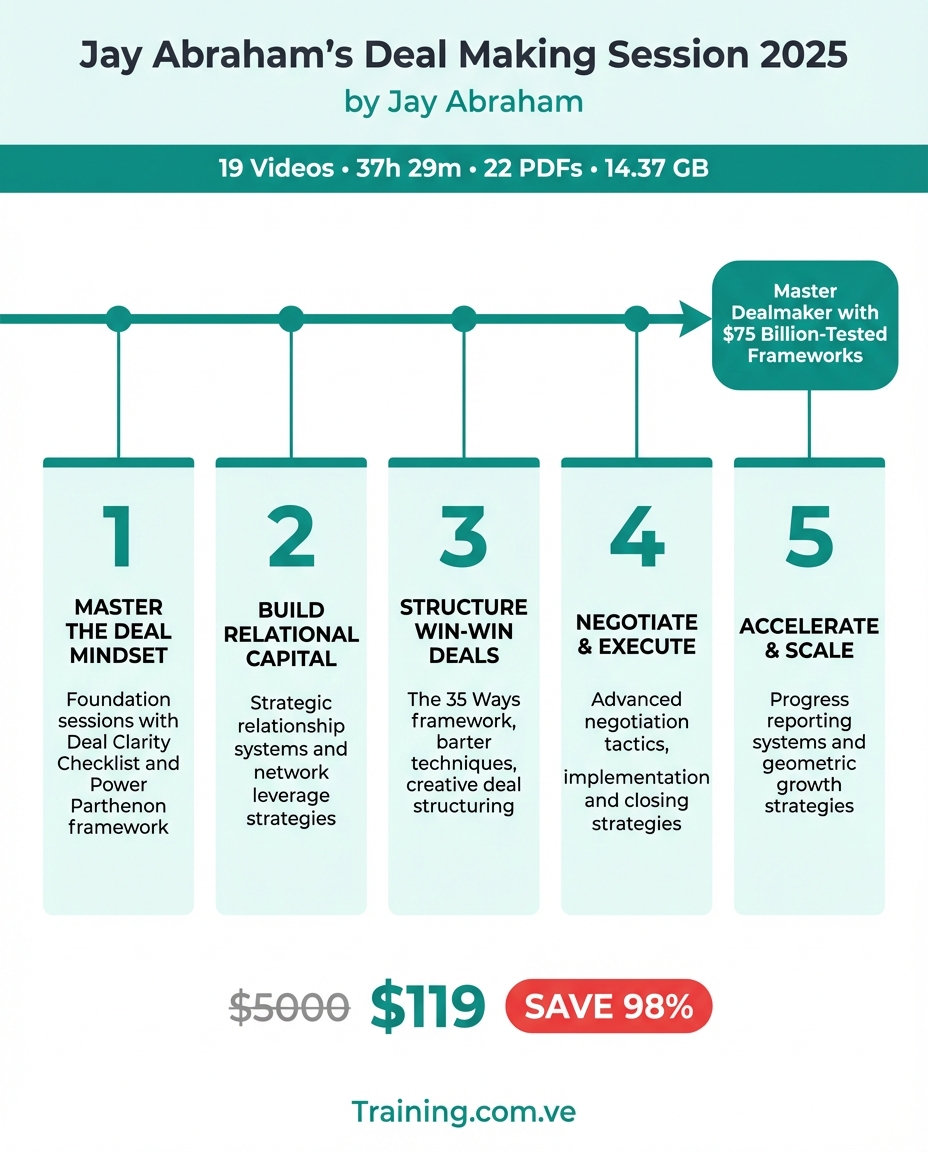
Common Mistakes
Mistake 1: Presenting the distribution agreement as a request rather than a solution. The most common failure in executing Sequential Leverage is approaching the distribution conversation as a sales pitch. You are not asking for shelf space. You are proposing to solve a category problem. The moment you lead with "I have a product" rather than "I understand you need X," you become one of hundreds of suppliers pitching product — and all of the conventional barriers (proven sales, established track record, minimum quantities) immediately apply. The conversation has to start on their problem. Their agreement is the outcome of solving it, not the request you are making. Mistake 2: Treating the agreement as too fragile to use. Some people secure a letter of intent or a conditional purchase agreement and then fail to present it clearly and directly to suppliers out of concern that the supplier will contact the distribution owner and expose the arrangement. This fear misunderstands the structure. The distribution owner agreed because they want the product. The supplier is being offered a committed buyer. There is no conflict of interest to expose. Present the agreement directly. Its value as leverage depends entirely on it being real, and using it as if it is real. Mistake 3: Stopping at one cycle. The most important framework principle here is compounding. Sequential Leverage is not a one-transaction technique. Its compounding power comes from the relationship capital that accumulates across iterations. One successful cycle creates track record with one distribution owner and one supplier. That track record is the leverage for the next agreement — with a second channel, a second supplier, or expanded terms with the first. Entrepreneurs who extract the $4,000/week and move on have not understood the model. The model is the track record itself, compounding with each completed transaction.What Sequential Leverage Does Not Cover
This is best suited for entrepreneurs with a concrete market entry or capital constraint problem. However, there are gaps worth naming.
Sequential Leverage assumes you can identify a viable distribution chokepoint and conduct a credible business conversation. If you are a complete beginner with no business experience, the framework describes a game you are not yet equipped to play. It also does not address digital-native distribution models — platform marketplaces, API partnerships, or SaaS channel programs — where the "shelf space" metaphor requires significant translation.
The course itself does not provide templated outreach scripts for the distribution conversation. You learn the principles; you build the language yourself.
FAQ
What is Sequential Leverage in Deal Making Session 2025?Sequential Leverage is Jay Abraham's 4-step framework for building businesses without upfront capital. The steps are: (1) identify the distribution chokepoint, (2) secure a distribution agreement before you have product, (3) use that agreement to source product on favorable terms, and (4) execute and use the track record as leverage for the next cycle.
Is Sequential Leverage only for physical products?No. The framework applies to any market where you can identify a distribution chokepoint and secure an agreement before sourcing. Services, consulting practices, content businesses, and hybrid models can all use the same sequence — secure demand first, then source supply.
How does Sequential Leverage relate to the other frameworks in Deal Making Session 2025?Sequential Leverage sits within a broader architecture that includes the 43 Ways of Power Partnering, the Allowable Acquisition Cost / LTV Model, the Power Parthenon, the Green/Yellow/Red Flag Deal Evaluation, the Relationship Capital System, the Deal Clarity Checklist, the Last Mile Execution Framework, and the 8-Element Partnership Agreement. Together they form a complete deal-making methodology.
Where can I read the full breakdown of Deal Making Session 2025?The complete independent breakdown — every framework, every limitation, and who the course is built for — is available at Course To Action. Start free.
The full breakdown of all 9 frameworks in Deal Making Session 2025 — Sequential Leverage, the 43 Ways of Power Partnering, the Allowable Acquisition Cost / LTV Model, the Green/Yellow/Red Flag Deal Evaluation, the Relationship Capital System, and the rest — is available free at Course To Action. No credit card required. Every summary includes audio and an AI tool — "Apply to My Business" — that maps each framework to your specific business situation. Course To Action covers 110+ premium courses at the same depth. The course costs $5,000. The breakdown is free.
Not a review. Not a rating. A complete framework-level analysis so you know exactly what you are buying — or whether you need to buy it at all — before you spend $5,000.
Start free at Course To Action — no credit card required. Course To Action publishes independent framework-level breakdowns of online courses — the 20% that delivers 80% of the value, so you can make an informed decision before you spend a dollar.Get All Frameworks from Deal Making Session 2025
The course costs $5000. The complete breakdown is $49/year — every course on the platform.
This is one framework. Course To Action has every framework, every lesson, and AI that applies it to your specific business. Read or listen — every summary has audio.
Start free — 10 full summaries, no credit card required