Hero Shot First Methodology Explained: Protect Every Wedding Shoot — from Beginners Guide to Wedding Videography by Runaway Vows
The Beginner's Guide to Wedding Videography is a $997 course by Runaway Vows — Jake Weisler and Nate Teahan — built around six named frameworks for filming and running a profitable wedding film business. The most foundational of those frameworks is called Hero Shot First Methodology: Runaway Vows' discipline for securing coverage of the three non-negotiable wedding moments before attempting any creative or experimental angles. It is the framework most likely to prevent the single most costly beginner failure in wedding videography.
There is a moment that every new wedding videographer eventually faces: you are chasing a creative angle, the drone is spinning up, you are watching the guests file into pews — and then the bride walks in. You missed the groom's reaction. You missed the start of the aisle walk. You have 30 seconds of scramble footage and no clean cut.
That moment is precisely what the Hero Shot First Methodology is designed to prevent.
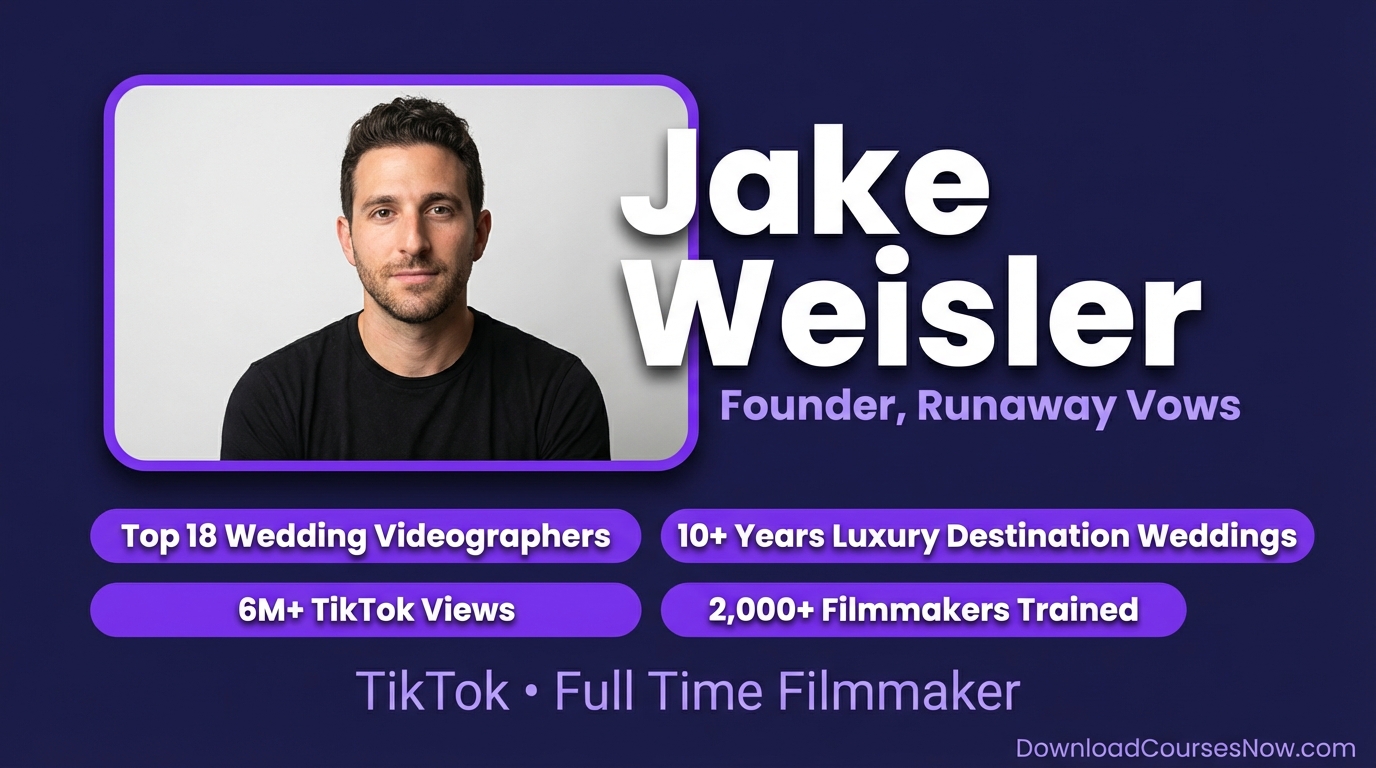
Taught inside the Beginners Guide to Wedding Videography by Jake Weisler and Nate Teahan of Runaway Vows — two of the most recognized wedding filmmakers in the United States — Hero Shot First is not just a tip. It is a discipline, a checklist mindset, and arguably the single most consequential framework a new videographer can internalize before ever setting foot inside a venue.
What Is Hero Shot First?
Hero Shot First Methodology is Jake Weisler and Nate Teahan's 3-step discipline for guaranteeing coverage of the ceremony's non-negotiable moments. The steps are: (1) position the anchor camera with a full ceremony sightline before guests are seated, (2) confirm audio is clean with a recorded test, and (3) do not move the anchor or pursue creative angles until both confirmations are complete.The framework operates on a simple principle: before you attempt anything creative, secure the essentials.
Before the drone goes up, before you experiment with a wide room shot from the balcony, before you try to capture candid emotional reactions from the crowd — you need one reliable audio source and one camera recording the ceremony from start to finish. That is the baseline. That is the hero shot.
Everything else is optional footage layered on top. The hero shot is not optional. It is the insurance policy that makes the rest of the film possible.
In practice, this means your first priority upon arriving at the ceremony space is positioning your "anchor camera" — a single, locked-off shot that captures the entire ceremony. A tripod at the back of the aisle, framed to see both the officiant and the couple, is the most common execution. Once that camera is rolling and your audio is confirmed clean, you have earned the creative freedom to explore.
The Three Must-Capture Moments
Hero Shot First is built around three non-negotiable moments. Miss any of these and the film is fundamentally compromised — not just aesthetically, but in terms of what the couple actually paid for:
1. The Groom's Reaction to the Bride Walking the Aisle
This is one of the most emotionally loaded seconds in the entire wedding day. The groom's face — whether he tears up, laughs, exhales with relief, or simply goes still — is irreplaceable. It cannot be restaged. It cannot be recreated in a golden hour portrait session later.
The Hero Shot First methodology demands that before anything else happens, you have a camera position that guarantees this shot. A second operator is ideal, but even with a single camera setup, the anchor camera framed at the start of the aisle will capture the groom's initial reaction as the doors open.
2. Exchanging Rings and Vows
Rings and vows are the legal and emotional core of a wedding ceremony. The audio clarity of the vows, the tight shot of hands during the ring exchange, the micro-expressions — these are the moments couples will watch on repeat for decades. A wide anchor camera handles the visual coverage. A dedicated audio source (lavalier on the officiant or groom, a room mic, or a recorder placed on the ceremony table) handles the sound. Both must be confirmed and running before the processional begins.
3. The First Kiss
Predictable in timing, yes — but it requires proper framing. The Hero Shot First approach ensures the anchor camera has been set at the right focal length and exposure to handle this moment cleanly. Blown highlights, a blocked frame, or an out-of-focus kiss because you moved the anchor camera to try something creative in the previous five minutes are all preventable failures.
Why Beginners Specifically Need This Framework
The creative pulls on a wedding day are real and constant. Guests are doing interesting things. Light is changing. You see a stunning architectural detail. Someone is crying behind a column and it would make a beautiful insert. The instinct to chase these moments is not wrong — it is part of what makes great wedding filmmakers.
The problem is that beginners have not yet built the automatic discipline to distinguish between "I have the hero shot covered and I'm free to be creative" and "I'm being creative before the hero shot is locked." That distinction is invisible when you are excited and the day is moving fast.
The key takeaway is this: Hero Shot First gives you a hard rule that converts an ambiguous judgment call into a binary checkpoint. Do not lift the anchor camera, do not chase a different angle, do not let anything distract you until you have physically confirmed that your primary camera is recording, your audio is clean, and your frame covers the beginning of the aisle to the altar. Only after that confirmation do you move.
Jake Weisler and Nate Teahan built this framework from years of real-world shoots — including high-stakes destination weddings where a missed moment has no recovery path. The framework is not academic. It is battle-tested.
Get Every Framework from This Course
The course costs hundreds of dollars. All frameworks extracted — $49/year.
Start free — 10 full summaries, no credit card
How Hero Shot First Scales with Camera Count
One of the more elegant aspects of this methodology is how it integrates with another core framework in the course: Scalable Camera Placement — Runaway Vows' system for positioning one through four cameras to maximize coverage without requiring a full crew.
With a single camera, Hero Shot First is everything. The anchor shot IS your film. You execute it flawlessly and then make the best creative choices you can within the constraint of not moving that camera during critical moments.
With two cameras, the second camera becomes your dedicated reaction and insert machine — free to roam precisely because the anchor camera is locked and trusted.
With three or four cameras, the creative layers multiply, but the anchor remains the anchor. The Hero Shot First mindset never goes away regardless of how many bodies and cameras you add to a team.
What makes this different from generic coverage advice is this scalability: professionals operating at the highest level of the industry still have an anchor camera at every ceremony. The terminology changes; the discipline does not.
This is one of 6 frameworks in the Beginner's Guide to Wedding Videography. The complete breakdown — every framework, every limitation — is available on Course To Action. Free account, 10 summaries, no credit card. The course costs $997 — read what's inside before you spend that. Or unlock all 110+ courses for $49/30 days.
The Practical Setup Checklist
Translating Hero Shot First into a pre-ceremony checklist looks like this:
- Identify anchor camera position (back of aisle or elevated rear position with sightline to altar)
- Lock tripod head, confirm frame covers aisle start and altar
- Set exposure for the lighting conditions at ceremony start time, not current ambient light
- Confirm audio source is recording and levels are appropriate — playback a test
- Confirm camera has sufficient battery and card space for the full ceremony duration
- Press record before guests are fully seated
- Do not touch the anchor camera until the ceremony is complete
Why This Framework Earns Its Place in a $997 Course
At $997 for 53 lessons, the Beginners Guide to Wedding Videography is priced as a serious professional investment. Hero Shot First justifies a meaningful portion of that price on its own.
Not because it is complicated — it is not. But because the cost of not knowing it is catastrophic. One missed groom reaction, one ceremony where audio drops and you have no backup, one film delivered to a couple that does not contain their first kiss in usable form — that is a refund request, a reputation hit, and potentially a legal dispute. The main limitation Hero Shot First addresses is the one failure mode in wedding videography that cannot be fixed in post.
The framework is worth far more than the course costs simply in mistakes it prevents.
For anyone standing at the beginning of a wedding videography career, Hero Shot First is the equivalent of a pilot's pre-flight checklist. It is not the most glamorous skill. It is the most important one.
Who the Course Is Built For
This is best suited for beginners and working intermediates who want to build a sustainable, profitable wedding film business. Jake and Nate are not teaching from a theoretical perch — they operate one of the most in-demand luxury wedding film companies in the country and apply every framework they teach on active shoots.
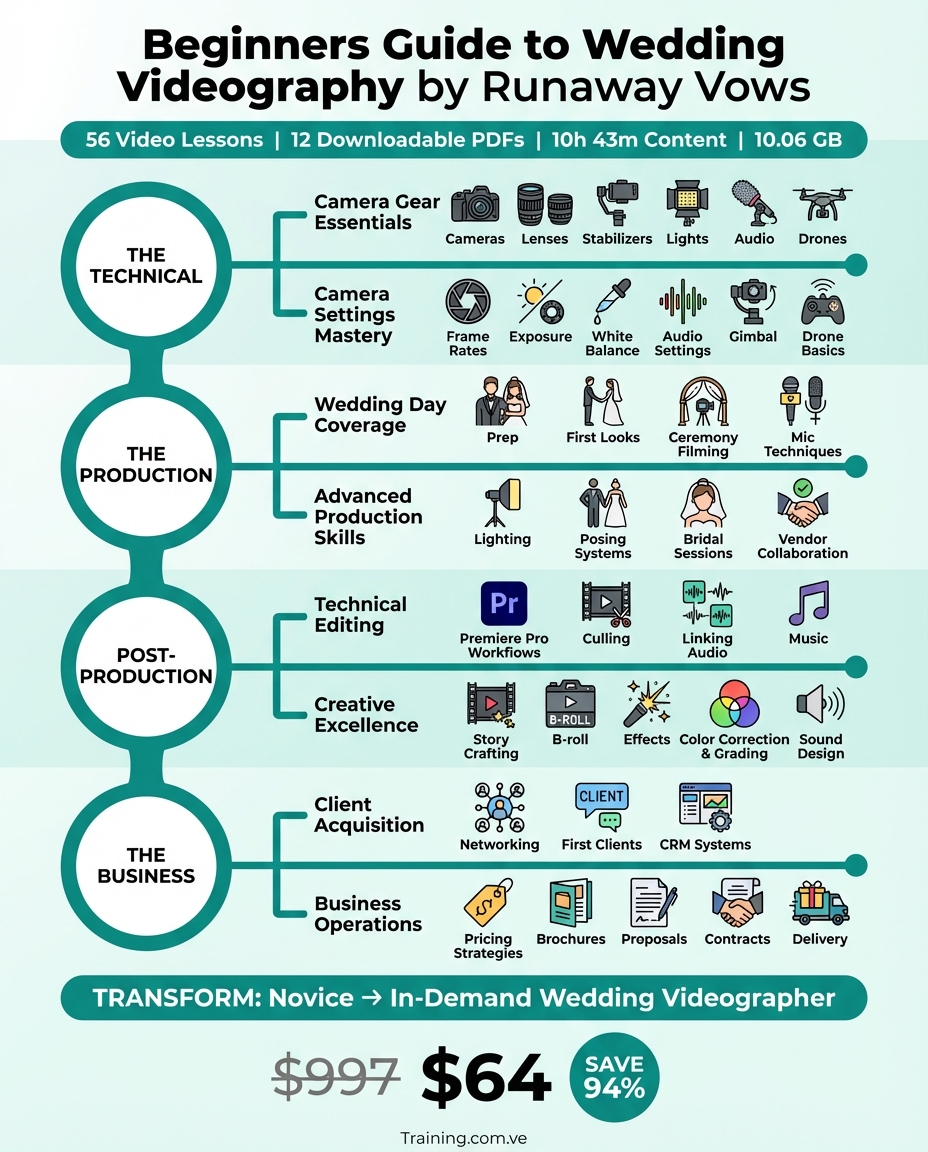
The 53-lesson structure covers the full arc from gear selection and ceremony capture through editing in Premiere Pro, client management, and the pricing and business systems that make the work financially viable long-term. Hero Shot First is the foundational technical discipline that makes the rest of the curriculum possible to execute on real wedding days.
In summary: if you are starting out in wedding videography, Hero Shot First is the single framework that determines whether you have a film to deliver at the end of every event. The rest of the curriculum builds on the guarantee it creates.
Before you spend $997 on the course, read the complete breakdown on Course To Action. Free account — 10 summaries + AI credits, no credit card required. Or unlock all 110+ premium courses, structured audio, and the 'Apply to My Business' AI tool for $49/30 days (one payment, no auto-renewal).
The AI has read the entire course — tell it about your wedding videography business and get a custom implementation plan.
Read the summary or listen to the audio version.
Course To Action publishes independent framework-level breakdowns of online courses — the 20% that delivers 80% of the value, so you can make an informed decision before you spend a dollar.Get All Frameworks from This Course
The course costs hundreds of dollars. The complete breakdown is $49/year — every course on the platform.
This is one framework. Course To Action has every framework, every lesson, and AI that applies it to your specific business. Read or listen — every summary has audio.
Start free — 10 full summaries, no credit card required