Worlds Not Offers Explained: Build Sellable IP Without a Personal Brand — from Afterparty by Ryan Lee
Afterparty is a $299 three-class workshop by Ryan Lee that teaches five frameworks for rebuilding a content business in the AI era. The most distinctive of those frameworks — and the one that separates Afterparty from every other creator pivot course — is called Worlds Not Offers.
Most course creators are building offers. Ryan Lee argues that is exactly the wrong unit to build around.
Offers are tied to you. They depend on your face, your reputation, your ability to keep showing up and selling yourself. When you get tired of the topic, when the market moves, when you want to sell the business, the offer collapses without you in it. You have not built an asset. You have built a job.
Ryan Lee has been in online marketing since 1999. He built the world's first sports training membership site while still working as a gym teacher in the South Bronx. Entrepreneur Magazine called him the "World's Top Lifestyle Entrepreneur." He has had six successful exits and spent more than 26 years watching what creators build — and what they fail to build. His conclusion, delivered inside his $299 three-class workshop Afterparty, is that the creators who win long-term are not building better funnels. They are building worlds.
The key takeaway is this: a fictional universe is an IP asset that can be sold, licensed, or handed to a team — something a personal brand or expertise-based course business almost never is.The framework is called Worlds Not Offers. It is the most distinctive idea in Afterparty, and once you understand the mechanics, the conventional creator playbook starts to look like a trap.
This is one of 5 frameworks in Afterparty. The complete breakdown — every framework, every limitation — is available on Course To Action. Start free.
What Is Worlds Not Offers?
Worlds Not Offers is Ryan Lee's content and IP architecture framework that replaces the personal brand funnel with a fictional universe as the primary IP asset. The framework has four core components: Mythology and Lore, Found Artifacts, Products That Emerge from the World, and a Sellable IP Layer.
The conventional model: You are the offer. Your expertise, your story, your methodology. You build content that drives people to you, and from you they buy access to your knowledge. The product is your insight, packaged and delivered. The problem with this model is that you are inseparable from the product. You cannot step back from it. You cannot sell it. You cannot hand it off. You are the IP.
The Worlds Not Offers model inverts this. Instead of building a brand around yourself, you build a fictional universe — a world with its own mythology, its own lore, its own characters, its own internal logic. The world exists independently. Products emerge from the world — journals, card decks, memberships, merchandise, event experiences, collectibles — rather than emerging from you as a person.
The result is an IP asset that functions independent of your personal brand. The world can be sold. It can be licensed. It can be handed to a team to operate. It can outlast your interest in it. You are the creator of the world, but you are not the world itself.
What makes this different is that you are no longer building a job disguised as a business. You are building an asset that has a life independent of your continued presence and energy.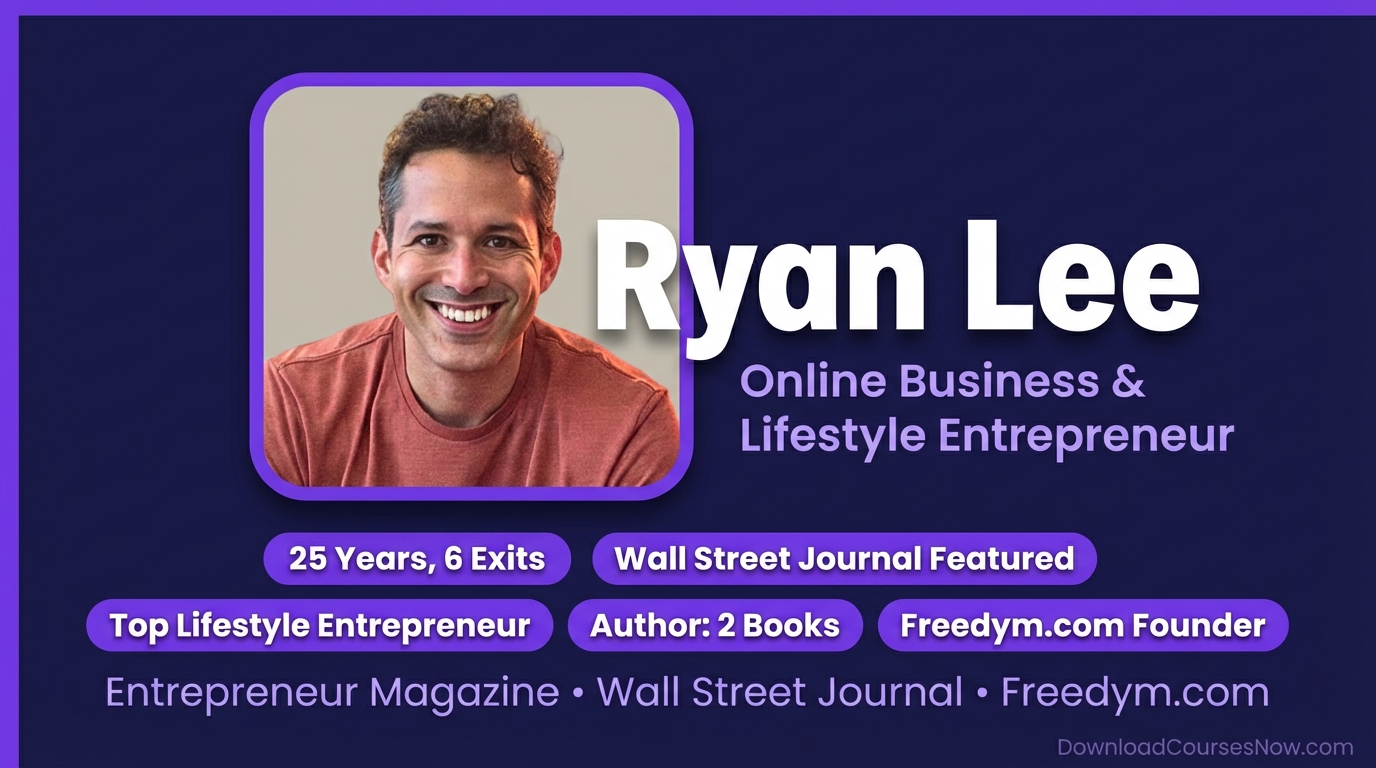
The Core Components
Mythology and Lore
Every world needs a founding story. Not your story — the world's story. A mythology that explains where the world came from, what it stands for, what it is oriented against. The mythology is not a mission statement. It is a narrative. It has conflict, stakes, and meaning. It gives members something to inhabit, not just something to buy.
Lore is the accumulated detail that makes the mythology believable and sticky. Rules, rituals, terminology, backstory, found artifacts. The more specific the lore, the more real the world feels, and the more committed members become to being inside it.
Found Artifacts
This is one of the most tactically specific components of the framework. Found artifacts are physical or digital objects that appear to belong to the world's fiction — journals written by a character in the universe, letters from a secret society, field notes from an explorer, devotional cards from a mythologized tradition.
Artifacts are products disguised as world-building. They generate revenue while deepening the fiction. A customer who buys a found artifact is not buying a product. They are buying a piece of the world. That is a fundamentally different psychological transaction — one that creates far deeper loyalty and far higher perceived value.
Products That Emerge from the World
In a conventional offer-based model, you decide what product to build based on what you know how to teach. In the Worlds Not Offers model, the world dictates what products make sense. What would exist inside this universe? What would its members use, collect, send to each other, wear, display?
The product catalog is constrained and guided by the world's logic, not by your expertise or your audience's tactical needs. This is what makes the catalog feel coherent rather than arbitrary — and what makes the business model extensible in ways that purely expertise-based businesses rarely are.
The Sellable IP Layer
The deepest implication of the framework: because the world exists independently of you, it is an asset in the traditional sense. It can be acquired. It can be licensed. It can be transferred. Ryan Lee's background includes multiple exits — he understands that the difference between a business and a job is whether the asset can function without the founder. Worlds Not Offers is his framework for building that exit optionality into the creative layer of the business from day one.
The Three Live-Built Universes
During Afterparty, Ryan Lee did not just explain the framework. He live-built three complete fictional universes to demonstrate it working in real time across completely different markets. These examples are the most instructive part of the workshop because they show the framework applied to niches that look, on the surface, like they would resist this kind of treatment.
The Lost Journals of River X
Built around fly fishing. The premise: a series of journals left behind by a legendary, mythologized fisherman — "River X" — who fished every significant river system and documented not just technique but philosophy, observation, and hard-won wisdom.
The mythology: River X disappeared. The journals were found. The community exists to study and honor his tradition.
The products: Physical journal reproductions, annotated field guides, a membership for serious fly fishers who identify with the tradition rather than just the hobby. The artifacts — the journals themselves — are the entry point. Customers buy them not because they want information about fly fishing but because they want to be part of the tradition of River X.
Notice what is not present: Ryan Lee's personal relationship to fly fishing. He does not need to be an expert fisherman. He is the architect of the world. The world can be operated, scaled, and sold without him.
Letters to Christian Husbands
Built around faith and marriage. The premise: a brotherhood organized around the idea that being a good husband is a discipline, not just an identity — and that the men who take it seriously deserve a community built for that seriousness.
The mythology: An epistolary tradition — letters sent between men committed to the same values, across distances, across time. The world's lore lives in the format of communication itself. Letters are not just marketing. They are the artifact.
The products: Physical mailed letters (a membership product), devotional card decks, community access, seasonal publications. The mailed letter as product is the key innovation here — it is a found artifact that arrives at your home, belongs to the fiction, and creates a recurring revenue stream that is entirely built into the world's logic.
The market — Christian husbands committed to their marriages — is deeply underserved by conventional expertise-driven content. The world-based approach reaches them through identity, not information.
The Revive Society
Built for women over 50. The premise: a secret society organized around the idea that women in the second half of their lives are entering their most powerful chapter — and that a structured, mythologized community is the right context for that transition.
The mythology includes a Four Houses system — a classification structure similar to those used in fictional worlds with distinct paths or archetypes. Members identify with a house, which deepens the sense of belonging and creates natural community structure without requiring top-down programming.
The products: Membership, collectibles tied to the Four Houses structure, events and gatherings with ceremony built into them, merchandise that marks membership in the society.
The core insight is that the fictional layer is not frivolous. For an audience that has historically been dismissed, condescended to, or underestimated by consumer culture, the mythology of a secret society says something more meaningful than any expertise-based pitch could. It says: you belong to something. That is worth paying for.Get Every Framework from Afterparty
The course costs $299. All frameworks extracted — $49/year.
Start free — 10 full summaries, no credit card
How to Apply This Week
Day 1-2: Define the world's mythology in one page. Do not start with a product or a funnel. Start with the world. What is its founding story? What happened before the world existed that makes the world necessary? Who is the central mythological figure — it does not have to be you — and what did they do, discover, or leave behind? Write it as a story, not a statement. It should read like the first page of a book, not a mission statement. Day 3: Identify three found artifacts the world would contain. What physical or digital objects would exist inside this fiction? A journal. A letter. A card deck. A map. A field guide. An almanac. A badge. For each one, write one sentence describing what it is, one sentence describing what it would mean to own it as a member of the world, and one sentence describing what it would cost to produce. Day 4: Map one product to emerge from each artifact. One artifact becomes a one-time purchase product. One becomes the entry point to a membership. One becomes a collectible or seasonal release. You now have the skeleton of a product catalog that is entirely grounded in the world's logic. Day 5: Write the world's first piece of public lore. Not a sales page. Not a pitch. A piece of content that belongs to the world — a found fragment, an excerpt from the mythology, a letter from a character inside the universe. Publish it. See what it attracts. The audience for a world is different from the audience for an offer, and the only way to find them is to show them the world exists.Common Mistakes
Building a world that is secretly just about you. The most common failure mode is creating a fictional layer that is transparently autobiographical — the mythology is your story with different names, the artifacts are your face in different packaging, the world's lore is your content marketing in costume. A world needs to be able to exist without you at the center. If the mythology collapses when you remove yourself from it, it is not a world. It is a personal brand with decorative fiction. Starting with the product instead of the mythology. The framework requires building the world before building the products. Most creators reverse this — they decide what they want to sell and then try to construct a world around the product. This produces incoherent IP. The world should generate obvious products naturally. If you are forcing products to fit a world, you built the world wrong or built the product first. Making the lore too complex to enter. The internal logic of a world needs to be deep enough to sustain exploration but accessible enough to enter quickly. A prospect encountering the world for the first time should be able to understand what it is and feel the pull of belonging within minutes. The Four Houses structure in the Revive Society works because it is immediately intuitive — you can place yourself in a house without a manual. Complexity that rewards commitment is valuable. Complexity that prevents entry is fatal. Treating the fictional layer as optional once the business is running. The world is the business, not decoration around the business. Creators who successfully launch a world-based model and then gradually strip away the mythology to "simplify operations" are systematically destroying the asset they built. The lore, the artifacts, the rituals, the mythology — these are the moat. They are what makes the business non-commodifiable. Maintaining them is not overhead. It is the product. The main limitation of the framework as taught in Afterparty is that it is presented at the conceptual and strategic level, without templates, worksheets, or case studies of creators who have run a Worlds Not Offers business for multiple years and can show the revenue results. Ryan is building the examples live in the workshop — compelling to watch, but not the same as a proven playbook.The Asset You Actually Want to Build
Ryan Lee has built and sold multiple businesses over 26 years. The pattern he has observed, and the one Worlds Not Offers is designed to address, is simple: businesses built around personal expertise are almost always unsellable at full value. The asset walks out when the founder does.
Businesses built around worlds — around mythology, lore, and community that exists independently of the founder — are sellable. They are licensable. They are transferable. They generate revenue while the founder steps back. They compound in value as the lore deepens and the community grows.
For creators who have spent years building expertise-based businesses and arrived at the exhausted, revenue-capped end of that model, Worlds Not Offers is not a rebranding exercise. It is a fundamental architectural shift. A different unit of analysis. A different kind of IP.
In summary: the Worlds Not Offers framework is Ryan Lee's answer to the question "how do you build an online business that does not collapse when you step away from it?" The answer is: you build a world, not an offer. You build mythology, lore, and found artifacts that exist independently of your face, your energy, and your continued willingness to show up.The full framework — along with the Three Roles Framework, the New Monetization Hierarchy, the 100-Video Pivot Threshold, and the Guide Matrix — is in Afterparty. Ryan live-built all three universes in the workshop. You watch the world-building happen in real time.
The full breakdown of all 5 frameworks in Afterparty — the Three Roles Framework, the Guide Matrix, the New Monetization Hierarchy, Worlds Not Offers, and the 100-Video Pivot Threshold — is on Course To Action. Every summary includes audio. The AI tool "Apply to My Business" lets you take any framework and apply it directly to your business in minutes.
Course To Action publishes independent framework-level breakdowns of online courses — the 20% that delivers 80% of the value, so you can make an informed decision before you spend a dollar.Afterparty costs $299. Course To Action is $49 for 30 days — with access to 110+ premium course breakdowns, audio on every summary, and AI credits included. Or start free with no credit card required: 10 summaries and AI credits at no cost. Read the full Afterparty breakdown at Course To Action.
Get All Frameworks from Afterparty
The course costs $299. The complete breakdown is $49/year — every course on the platform.
This is one framework. Course To Action has every framework, every lesson, and AI that applies it to your specific business. Read or listen — every summary has audio.
Start free — 10 full summaries, no credit card required